

Viceroy Residences, Playa del Carmen
A branded residence on Calle 32 Norte, delivering Phase 1 in December 2028, carrying a hotel name its own developer holds under a revocable licence.
Viceroy Residences Playa del Carmen is a six-storey residential building with a penthouse level, on Calle 32 Norte in the Gonzalo Guerrero neighbourhood. It is developed by Related Group and Grupo Hotelero Santa Fe with Simca as co-developer, with Banco Monex as legal trustee, and it carries the Viceroy name under a licence rather than owning it. Residences run from one to four bedrooms with hotel-style service: a residents-only beach club, spa, ocean-view restaurant and three rooftop infinity pools. Phase 1 delivery is declared for December 2028, so this is a pre-sale. The developer’s own material disclaims, in writing, any projection of rental income, appreciation or investment return.
Source: Purchaser’s Guide (Spanish and English), Sales Presentation General and the Levels deck, all developer-issued. Captured 25-Aug-2026, re-read 26-Aug-2026.
It fits you if
You want to sit down with someone. This is a project that releases its numbers in a conversation, on purpose, and a buyer who is comfortable with that gets a level of attention the self-service market does not offer.
You want hotel-grade service built into ownership: a residents-only beach club, spa, ocean-view restaurant and rooftop pools run by a residential hospitality team, not a self-managed amenity package.
Your horizon reaches December 2028. Money goes in across the build and comes back as keys more than two years out, which is a different product from anything deliverable this season.
You are buying the membership as much as the unit: GHA Discovery access and preferential rates across Viceroy’s global portfolio, rather than chasing the lowest entry ticket on the corridor.
It doesn't if
You need a guaranteed rental return or an appreciation number. The developer’s own presentation disclaims any such representation in writing, and at least one third-party reseller markets this project with exactly that kind of projection anyway.
You want to compare before you talk. No price list exists in the developer’s folder, and no HOA, payment or legal document either. See Price and financing below for what the market says and why it is labelled as the market.
You need the Viceroy name to be permanent. The licence is described in the developer’s own materials as limited, non-exclusive, revocable and non-transferable, and the disclaimer contemplates the brand changing after completion, not only before it.
You want beachfront. The developer’s own master plan puts the building one row back from the water, with an existing beachfront property between it and the sand.
The north end of Fifth Avenue.
Worth being precise about what sits inside what. This is one building on Calle 32 Norte, inside the Gonzalo Guerrero neighbourhood, which is the northern half of Playa del Carmen, which is the seat of the municipality of Solidaridad. The commercial name for these blocks is Little Italy: the stretch of Fifth Avenue from roughly Calle 20 to Calle 42, named for the Italian restaurateurs who settled it. Calling this project “Playa del Carmen” describes a coastline many times its size.
The corridor is consolidated, walkable and international, with restaurants and boutiques on the avenue and the beach two to three blocks east. It is quieter than Centro and it is not quiet: most of its housing stock runs as vacation rental, and the neighbours turn over. Three things it asks in return. Sargassum hits these beaches hard from April to October, and 2025 was the worst collection year in four. Beach-club noise reaches the units closest to the water. And the cyclone record is real: Wilma came ashore in 2005 with a storm surge near 4.6 meters.
Source: FEUDO zone research, Little Italy dossier, compiled June 2026 from expat and local sources and cross-checked against CENAPRED, NOAA and regional sargassum monitoring. It describes the corridor, not this building.
The developer’s own site aerial, shown whole rather than cropped, because the information is in the geometry. The project footprint is the large complex at the center, and between it and the water sits an existing beachfront property with palapa (thatched, palm-roofed) roofs and beach-club umbrellas. The sand is close, and it is not the front yard.
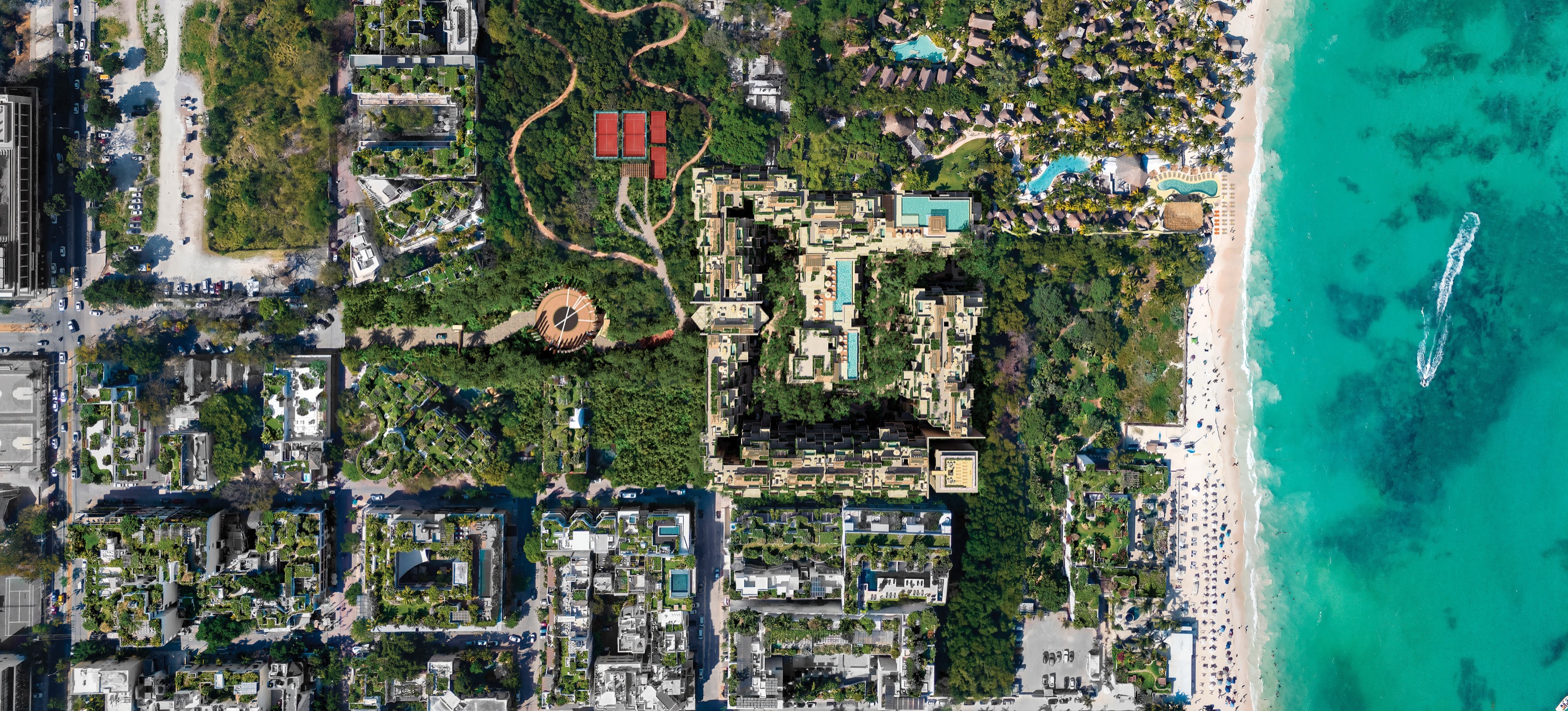
Source: the developer’s own folder, 04. Floor Plans / 07. Master Plan. The reading is ours.
The missing price list is the product working as designed.
Read as a document set, this folder looks incomplete: no price, no HOA, no payment plan, no contract. Read as a sales strategy, it is coherent. A branded residence protects its numbers on purpose and releases them to buyers who have shown intent and profile. Related Group does not publish prices for its own developments either, anywhere in its portfolio. What looks like a gap is a filter, aimed at the buyer who wants to sit down with someone rather than the one who wants everything online on day one.
Demand data explains why that filter has to exist. Across Playa del Carmen, 226 apartment requests came through brokers this year, tracked by FEUDO’s own monitor of what agents write down. Seventy-three percent sit below USD 250,000, and everything above USD 400,000 accounts for 22 requests in total. A branded residence is not competing for the corridor’s volume, it is competing for a few dozen buyers a year, most of whom never come from a portal search. That is also the honest answer to the resale question: the pool that can take this off your hands in 2029 is small, and it is not the pool that fills the rest of these blocks.
And here the premium is not paid for location, because the building is not on the water. It is paid for a name held under a revocable licence and for a beach club reached across land the aerial suggests belongs to somebody else. Both are probably fine, and both are contractual rather than physical, so they are worth exactly what the paperwork says.
Sources: demand figures from FEUDO’s own broker-request monitor, Playa del Carmen apartments, May to August 2026. The read on brand information strategy is an inference, informed by Related Group’s published practice across its portfolio. Licence and beach-club points are sourced in the questions below.
Seven questions to settle before you sign.
Each one comes straight out of the developer’s own documents. Open any of them for what they say, why it moves the decision, and how it gets settled.
Question 1 of 7
If the Viceroy name goes away, what exactly did you buy?
The licence can end at any point, including after the building is finished. The unit survives, the name does not.
Read the reasoning +Close −
The disclaimer is identical, word for word, in the Sales Presentation, the Purchaser’s Guide and the Levels deck. The licensee is not Related Group: it is the Developer of record, Banco Monex acting as trustee of fideicomiso F/12238, which "uses certain Viceroy trademarks in connection with the sales and marketing of the residential units at the project under a limited, non-exclusive, non-sublicensable, non-transferable, conditional license from Viceroy Hotels, LLC." Then the operative sentence: "The foregoing license may be terminated or may expire without renewal, in which case neither the residential unit nor any part of the project will be identified as a Viceroy branded project or have any rights to use the Viceroy trademarks." A separate clause in the same paragraph says the hotel brands and amenities described "are accurate as of this publication date; however, Developer does not guarantee that these will not change prior to, or following, completion."
Why it moves the decision
Two readings circulate about this project and only one survives the text. It is not that the name applies during construction and drops at delivery. What the document says is that the name lives or dies with a licence that can be terminated or simply not renewed, on no stated schedule, and the second clause puts that risk explicitly on both sides of completion. Since a branded residence charges a premium for the name, the buyer is paying up front for something the seller is careful never to promise for any length of time. The building is unaffected either way, and it is worth being clear about that too: losing the licence does not touch title, the unit or the amenities as built.
How it gets settled
Ask the Developer for the term of the licence agreement, its renewal mechanism and what happens to the residential management contract if it lapses. None of that is in the sales folder, and the only document that governs the offering is the Prospectus, which the disclaimer itself points you to. It is a fair question and a licensor of this size answers it in writing.
Source: Sales Presentation General.pdf, Purchaser’s Guide (ES + EN) and LEVELS - VICEROY RESIDENCES.pdf, developer-issued, identical disclaimer in all three. Read 26-Aug-2026.
Question 2 of 7
The building is not on the sand. What is "private direct beach access"?
The developer’s own aerial shows a built strip between the project and the water. The amenity is real, the route to it is undocumented.
Read the reasoning +Close −
The Purchaser’s Guide lists "private direct beach access" and a residents-only beach club with a pool, cabanas, food and beverage service and "a serene stretch of sand reserved for those who call Viceroy home." The master plan image in the same folder is a vertical aerial of the block, and on it the residential footprint sits inland with an existing beachfront property, palapa structures and beach-club umbrellas, occupying the shoreline in front of it. Related detail from the folder inventory: the floor-plan folder also holds one file named for Mahekal, the beachfront hotel operated by Grupo Hotelero Santa Fe, which is one of the two firms named as Developer on the Levels deck.
Why it moves the decision
The beach club is the amenity the marketing leans on hardest, and it is the one whose legal basis is least visible. If the sand is reached across land the project does not own, then what a buyer owns is a contractual right of passage rather than a frontage, and rights of passage have terms, holders and expiry dates. That also reframes the view: the disclaimer already warns that any view "may in the future be limited or eliminated by future development," and a building set one row back from the water is exactly where that clause bites.
How it gets settled
Ask which parcel the beach club sits on, who owns it, and whether access is an easement, a servidumbre registered against the title, or a service agreement with a neighbouring operator. Land ownership is a public-records search at the Registro Público de la Propiedad in Quintana Roo and does not need the developer’s permission.
Source: Purchaser’s Guide, amenity list and beach club pages; master plan aerial, folder 04. Floor Plans / 07. Master Plan; folder inventory of the shared Drive, 346 entries, checked 25-Aug-2026.
Question 3 of 7
December 2028 is Phase 1. Where is Phase 2 on your floor?
The plan folders carry an explicit Etapa 2 on two levels. No document anywhere gives it a date.
Read the reasoning +Close −
Every one of the seven level pages in the Levels deck repeats the same line: Phase 1 delivery, December 2028. Nothing in the Sales Presentation or the Purchaser’s Guide explains what Phase 1 excludes. The folder structure does: inside 04. Floor Plans, both the ground floor and the first floor have a dedicated sub-folder labelled Etapa 2, alongside the Phase 1 plans for the same levels.
Why it moves the decision
This is not a naming quirk. A sales representative describes the split in physical terms: Phase 1 is the front of the site and Phase 2 is the back, and they build front first. Combined with the folder structure, that means the second stage sits behind the units delivered first, on the same ground and first floors where the arrival lobbies, the gardens and the shared spaces live. A buyer taking delivery in December 2028 needs to know whether they are moving into a finished building or the finished half of one, because the difference is a construction site behind the window and an amenity roster that is not complete on day one. It also sets up a question nobody asks in a sales meeting: which phase your unit is in decides whether you are the one living through the second build or the one arriving after it.
How it gets settled
Ask for the Phase 2 scope and delivery date, and which units and amenities belong to each phase. Then ask for it as a schedule attached to the purchase contract rather than as a statement in a meeting, since the disclaimer is explicit that only the Prospectus binds.
Source: LEVELS - VICEROY RESIDENCES.pdf, all 7 level pages; folder tree of the shared Drive, 04. Floor Plans / 00. Planta Baja / 0.- PB Etapa 2 and 01. Primer Piso / 1.- 1er Nivel Etapa 2. Checked 25-Aug-2026.
Question 4 of 7
Why is there no price, and what does that cost you?
It is policy, not an oversight. Related Group does not publish prices on its own developments either.
Read the reasoning +Close −
There is no price document anywhere in a 372-entry folder, and the Levels deck closes every single level page with "for prices and availability contact a Viceroy agent." That is consistent across the brand: Related Group does not publish figures on its own site for its developments. Prices for this project do exist publicly, on around nine third-party reseller sites, and they do not agree with each other.
Why it moves the decision
The useful conclusion is not that something is being hidden. A branded residence releases its numbers through a conversation on purpose, because the product is sold to a buyer who is expected to sit down with someone. What it costs you is concrete: you cannot compare this against the zone before the meeting, and the figures you will find by searching are secondhand and spread about 11 percent apart. Part of that spread now has a confirmed cause rather than a suspected one. This project is priced in pesos, and the developer’s own inventory system converts to dollars using a Banxico rate stamped with the date it was taken. Every dollar figure online is therefore somebody’s conversion on somebody’s day, and none of them say so.
How it gets settled
Ask for a dated price list and a payment schedule in the same document, both in the currency the contract will be denominated in. That last part is not a formality: the dispersion between resellers is best explained by an unstated currency conversion, and which currency the contract runs in decides who carries the exchange-rate risk for the next two years.
Source: LEVELS - VICEROY RESIDENCES.pdf; full manual read of the 372-entry folder, 25-Aug-2026; the six named resellers listed under price, each read 25-Aug-2026; and figures observed on the developer’s own inventory system at its sales office, May 2026, which are subject to change as any unpublished price is.
Question 5 of 7
Can you actually rent it out? Ask before you model any income.
A sales representative says no short-term letting: long-term only, a year at a time. Nothing in writing confirms it, and nothing in writing contradicts it either.
Read the reasoning +Close −
Asked directly at the developer’s sales office, a representative said short-term platform letting will not be permitted and that rental will be long-term only, tentatively a one-year minimum. That word, tentatively, is doing a lot of work. Nothing in the developer’s shared material addresses rental restrictions at all: there is no HOA document, no condominium regime, no house rules and no rental-program description anywhere in the 372 entries.
Why it moves the decision
This is the single assumption most likely to be wrong in a buyer’s spreadsheet, and it is worth more than the price question. A branded residence in Playa del Carmen is very often bought on the expectation of nightly rates through the brand or a platform, and the amenity roster is built to support exactly that story. If letting is capped at one-year tenancies, the income model is not reduced, it is a different asset class: long-term tenancy yields in this corridor are a fraction of nightly gross, the tenant profile is local rather than visiting, and the brand premium you paid for stops earning. A buyer who pays a branded-residence price and then discovers a long-term-only rule has bought the amenities and none of the revenue they were sold as producing.
How it gets settled
Do not accept this in either direction from a conversation. The rule lives in the condominium regime and the house rules, neither of which exists yet on an unbuilt project, which means the developer will write them after you sign. Ask for the draft regime and the draft rental policy, ask whether a rental program through the operator is contemplated and on what split, and ask for whichever answer you get to be attached to the purchase contract. If the developer will not commit in writing, that itself is the answer, and it should be priced in before an offer rather than discovered at delivery.
Source: Stated verbally by a sales representative at the developer’s own sales office, May 2026, and subject to change like anything not yet in writing. The absence of any HOA, condominium-regime, house-rules or rental-program document was confirmed by a full manual read of the 372-entry folder, 25-Aug-2026.
Question 6 of 7
You are buying through a trust. Which document is the actual offer?
The Prospectus, which is not in the folder. Everything you have read, including this page, is marketing.
Read the reasoning +Close −
The legal Developer is Banco Monex, acting as trustee of fideicomiso F/12238. The disclaimer states that the offering "is made only by the Developer’s Prospectus for the Condominium provided to you by the Developer" and that no statement should be relied upon if it is not in that Prospectus. There is no Prospectus, no contract template, no condominium regime and no trust deed in the shared folder, and the same paragraph reserves the right to substitute equipment, materials, appliances and brands for items the Developer considers of equal or better quality.
Why it moves the decision
Everything attractive about this project reaches a buyer through documents that the developer has, in writing, told them not to rely on. That is standard practice and it is not a red flag by itself, but it does relocate the entire diligence: the specification, the finishes, the amenity list and the delivery schedule are only real to the extent they appear in the Prospectus and in the purchase agreement. On top of that, a foreign buyer on this coast takes title through a bank trust of their own, which is a separate instrument from the development trust and carries its own annual cost.
How it gets settled
Request the Prospectus before any deposit, not after, and read the substitution clause and the delivery schedule inside it. Have a Mexican notary or attorney who does not work for the developer review it, and confirm separately what the buyer-side fideicomiso costs to set up and to hold each year.
Source: Sales Presentation General.pdf and Purchaser’s Guide, legal disclaimer; absence verified across all 8 top-level folders of the shared Drive, 25-Aug-2026.
Question 7 of 7
How many units are there, and what will the HOA be?
276 floor plans, no declared unit count, and no fee document at all.
Read the reasoning +Close −
The developer never declares a total anywhere in its material. The plan folder holds 276 individual files, which points to a large inventory but is not a declared unit count and should not be used as one. Two resellers state 375 units across two phases; that figure is theirs, not the developer's. There is no HOA document, no fee schedule and no budget in the folder, on a project whose amenity list runs to a beach club, a spa, three rooftop pools, a restaurant, a padel and pickleball court, a kids club, a teen lounge, a pet spa, a business centre and a screening room.
Why it moves the decision
These two blanks multiply each other. A maintenance fee is the amenity budget divided by the units that share it, so with neither number a buyer cannot estimate the single largest recurring cost of owning here. And this is a hotel-serviced building: the fee will not be a typical Playa del Carmen condominium fee, it will carry hospitality staffing. On a unit bought to sit empty for most of the year, that line item is what decides whether the purchase is comfortable or a drag.
How it gets settled
Ask for the projected monthly fee per square meter, the unit count it is divided across, what the fee includes and excludes, and who sets it after delivery. Also ask whether the beach club and the hotel services are inside that fee or billed separately, since that is where these structures usually diverge from an ordinary condominium.
Source: Absence verified across all 8 top-level folders of the shared Drive, 25-Aug-2026; amenity list from the Purchaser’s Guide; plan count from the folder inventory.
You can settle this without them
- Who owns the beachfront parcel between the building and the sand, and whether any easement is registered: a public-records search at the Registro Público de la Propiedad of Quintana Roo.
- Whether the licensor is stable. The health of a brand you are paying a premium for is researchable without asking the seller.
- What comparable pre-construction on these blocks is quoting today, against the corridor chart further down.
- Municipal permits and environmental authorisation for the site, filed with Solidaridad and with state authorities, not with the developer.
Only they can answer this
- The Prospectus, plus a dated price list and a payment schedule in the contract currency.
- The term and renewal mechanism of the Viceroy trademark licence, and what happens to the management contract if it lapses.
- The Phase 2 scope and date, and which units and amenities sit in each phase.
- The projected maintenance fee, the unit count it is spread across, and whether hotel services are inside it.
Everything they shared, counted.
Eight folders and 372 entries, of which 276 are unit floor plans and 43 are renders. Deep on design, silent on commercial terms. Logos and broker paperwork are not counted below: they are sales tooling, not buyer diligence.
As shared by the developer · checked 25-Aug-2026. This declares what exists, it doesn't vouch for what's inside.
Brochure / sales materials
3 files, e.g. Purchaser's Guide (ES + EN) and Sales Presentation General
Floor plans
276 files, e.g. One file per unit, counted by folder inventory, not opened individually
Construction / delivery status
1 file, e.g. Levels deck, states "Phase 1 delivery: December 2028" on every level page
Price list
No price document, confirmed by a full manual read of the folder rather than automated detection. Every level page says to contact a Viceroy agent instead.
Legal / trust documentation
No standalone legal or trust filing. The trust (Banco Monex, F/12238) and the trademark licence terms are declared inside the sales materials, and the offering itself is made only through a Prospectus that is not in this folder.
HOA & fees
Not in the shared folder.
Payment terms
Not in the shared folder.
Purchase contract
Not in the shared folder.
3 smaller gaps, worth knowingopen +close −
The sales presentation disclaims, in writing, any representation about future profit, appreciation or rental income. That matters to a buyer for one reason: at least one third-party site marketing this same project offers exactly that kind of projection, sourced to no developer document. If a seller shows you a return model for this building, it did not come from the developer.
Six named resellers publish an asking price for the entry unit and they run from USD 370,000 to about USD 410,000. None is developer-issued. Each one appears further down under the name of the firm that published it, because the spread between them is the useful part.
The Levels deck is undated. It is the only document declaring a delivery date, so a buyer cannot tell how old that date is. Worth asking when it was issued.
The project, as rendered
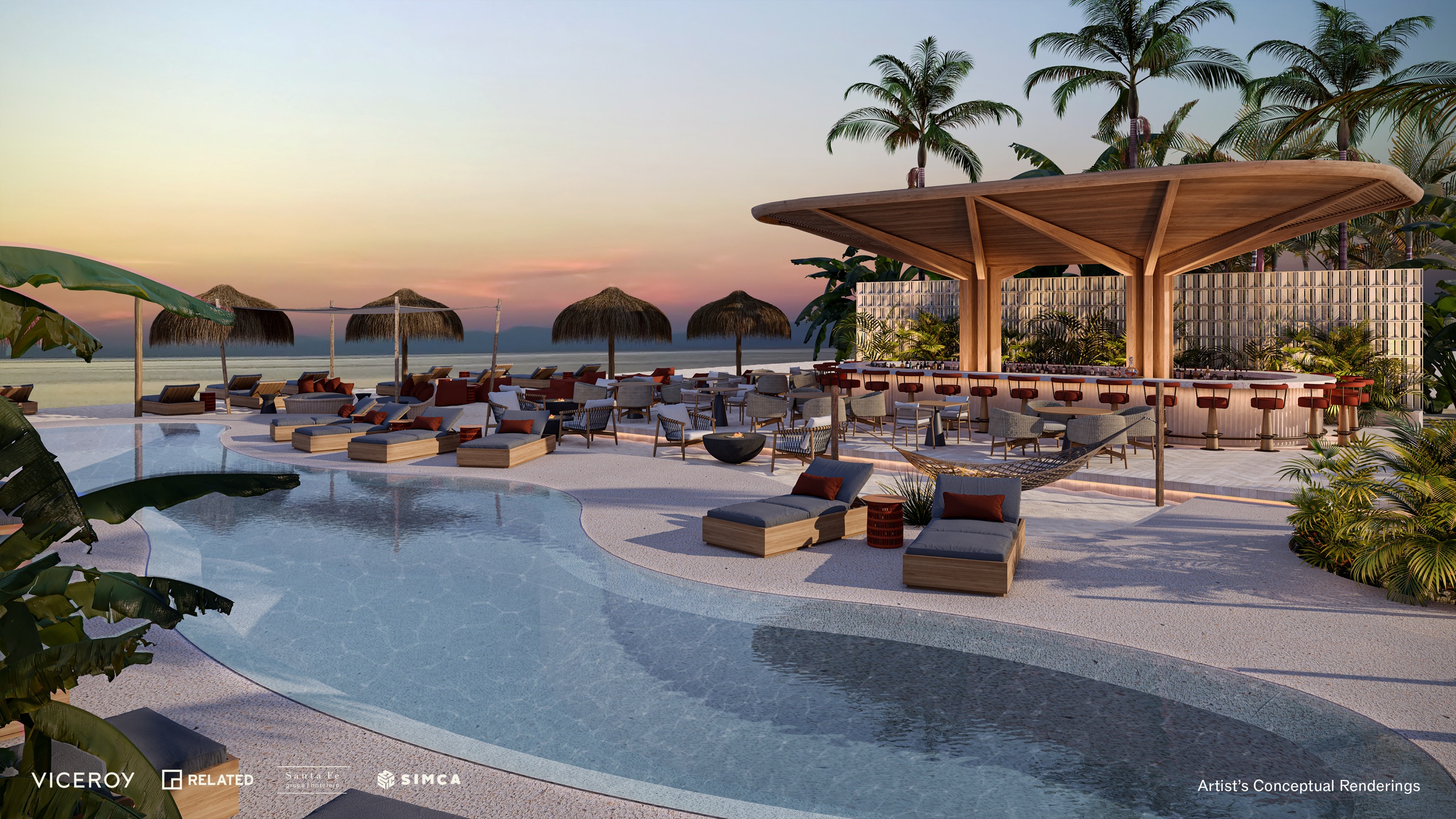
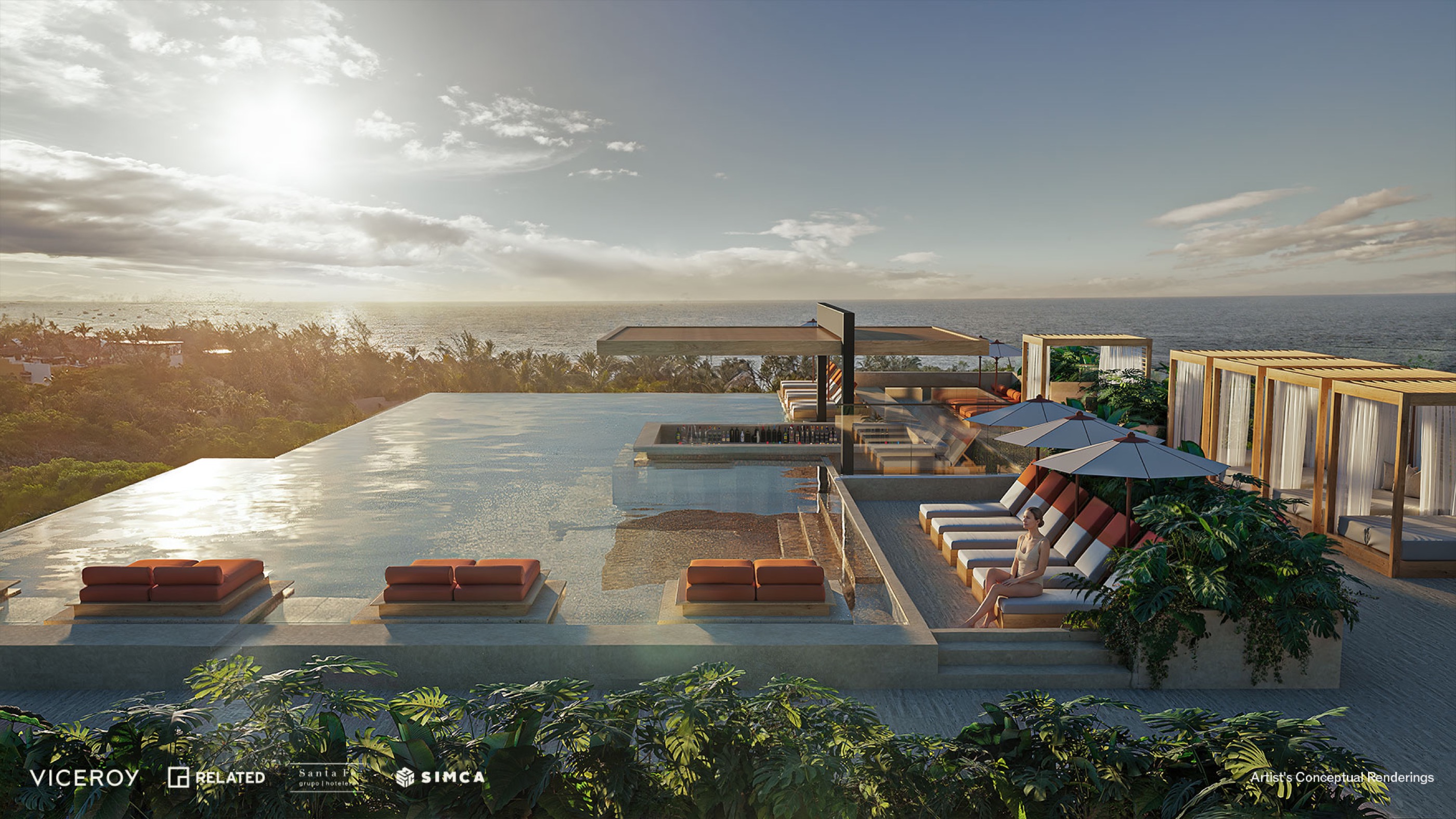
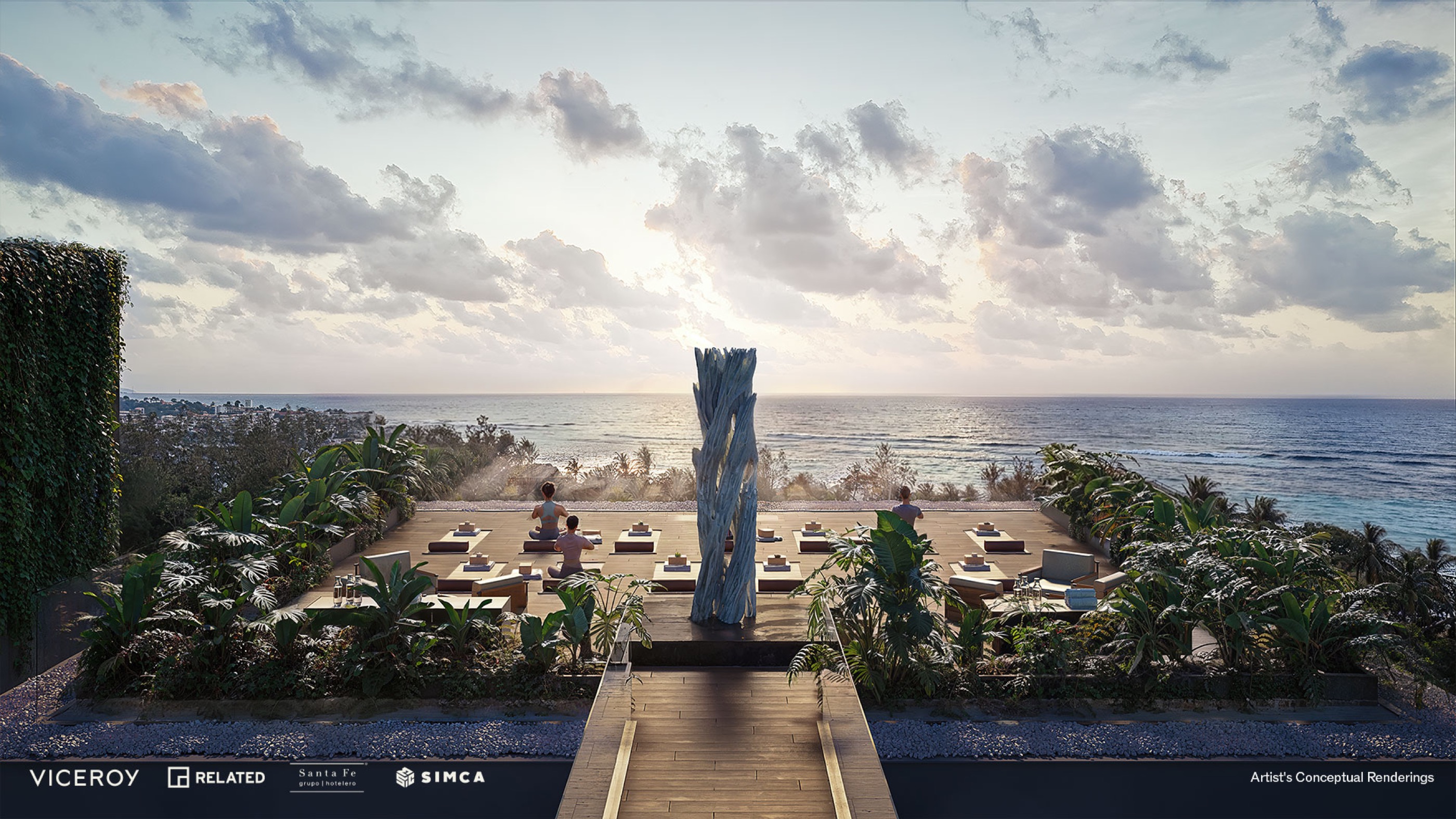
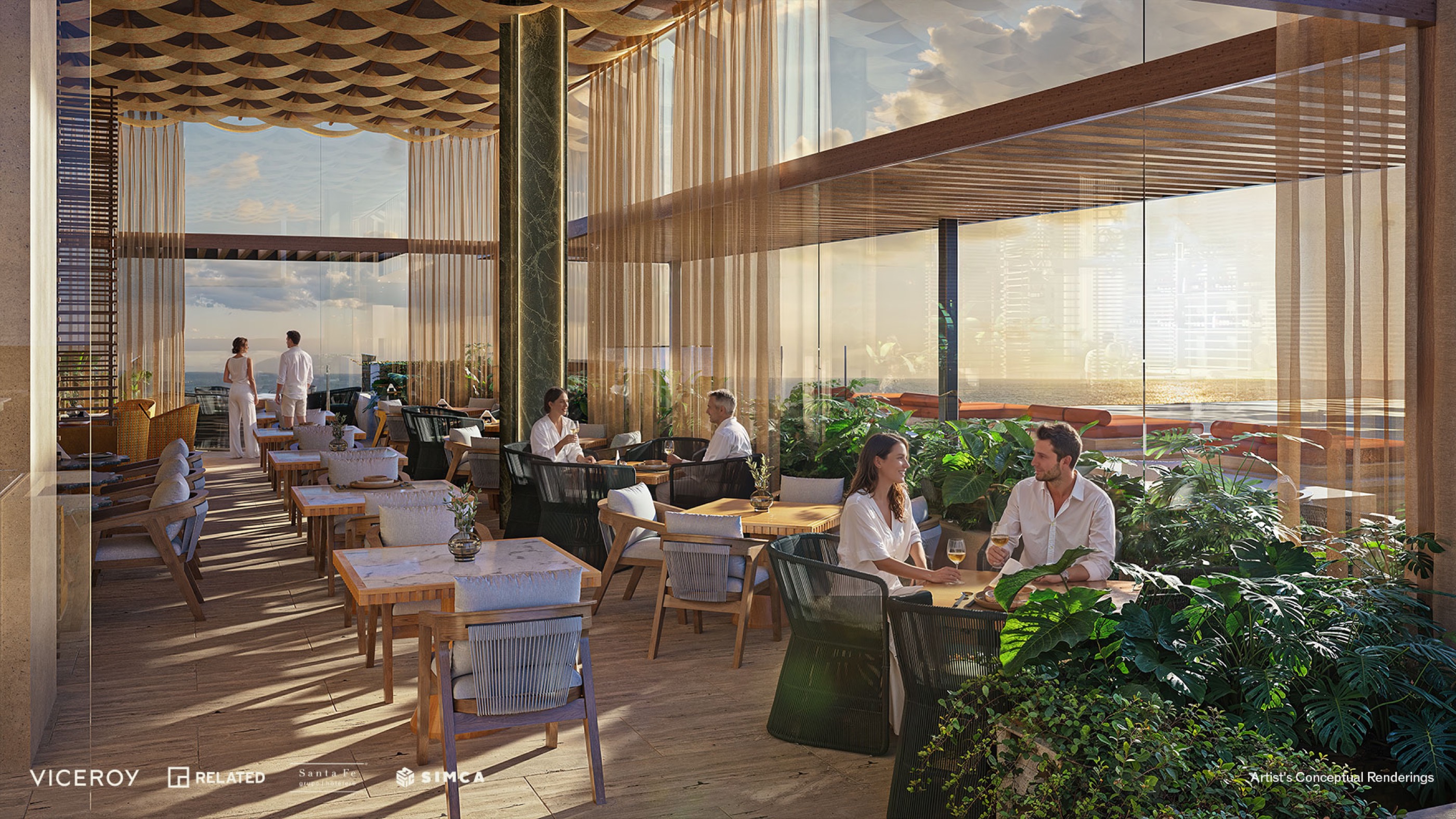
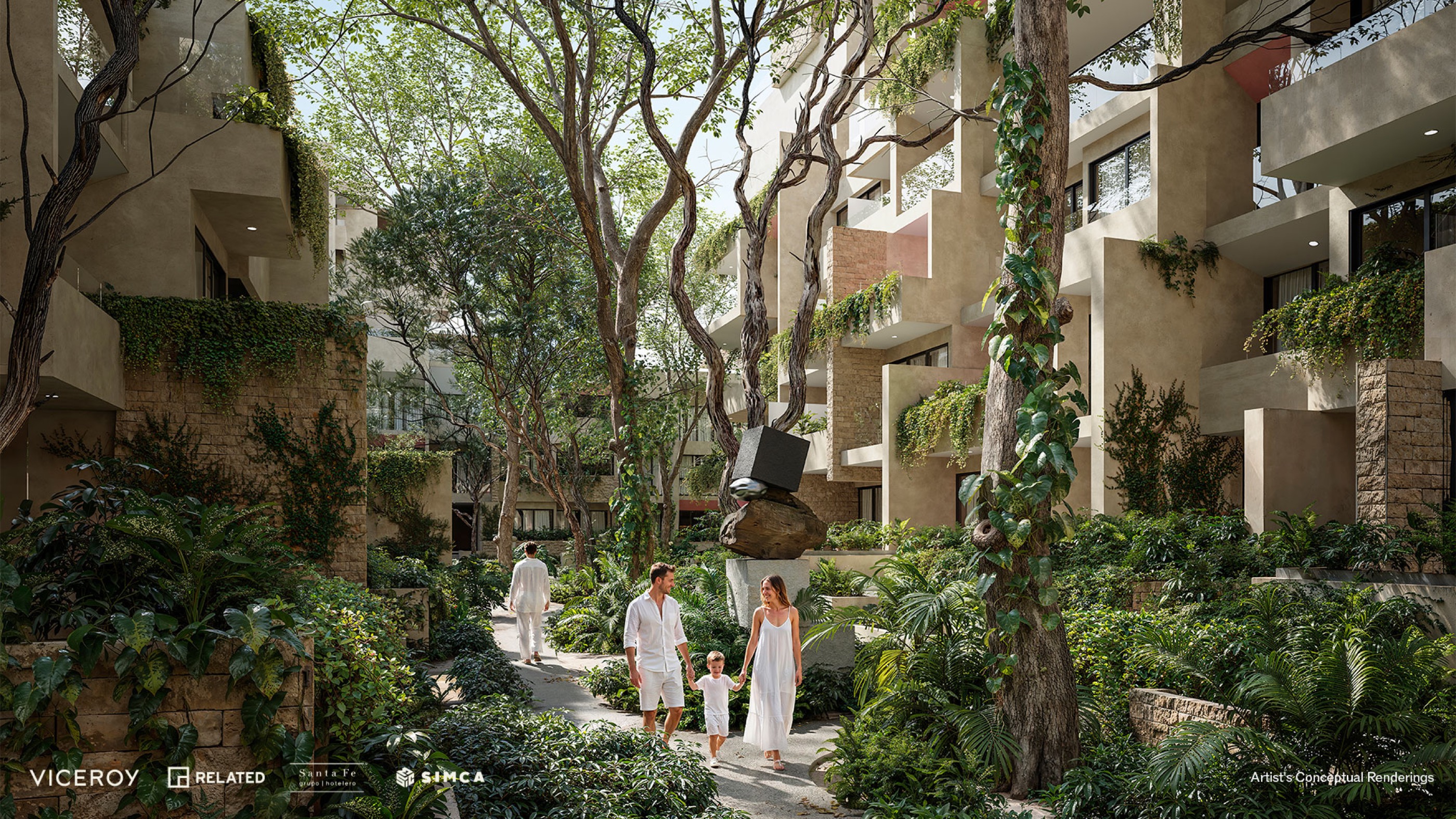
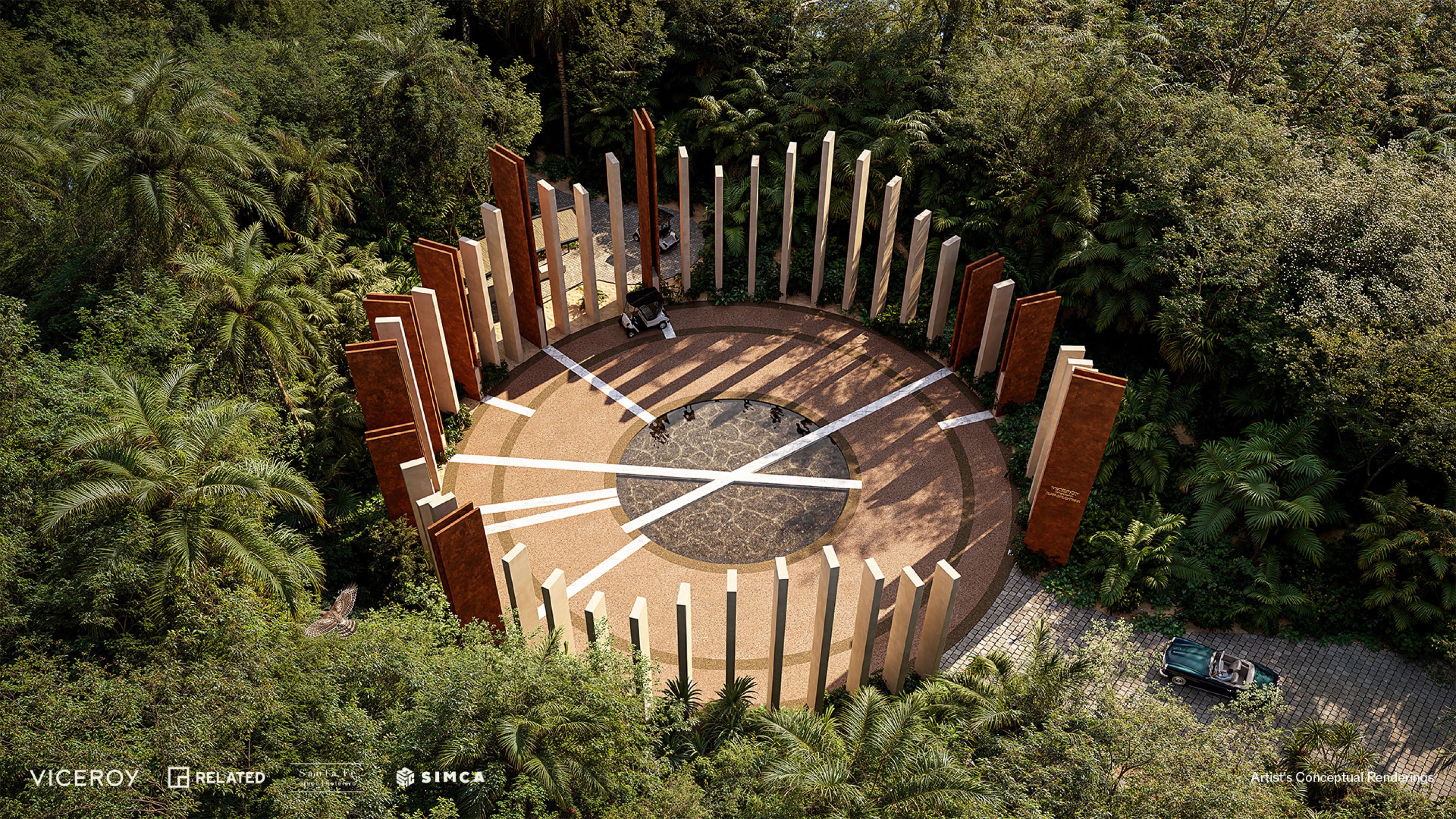
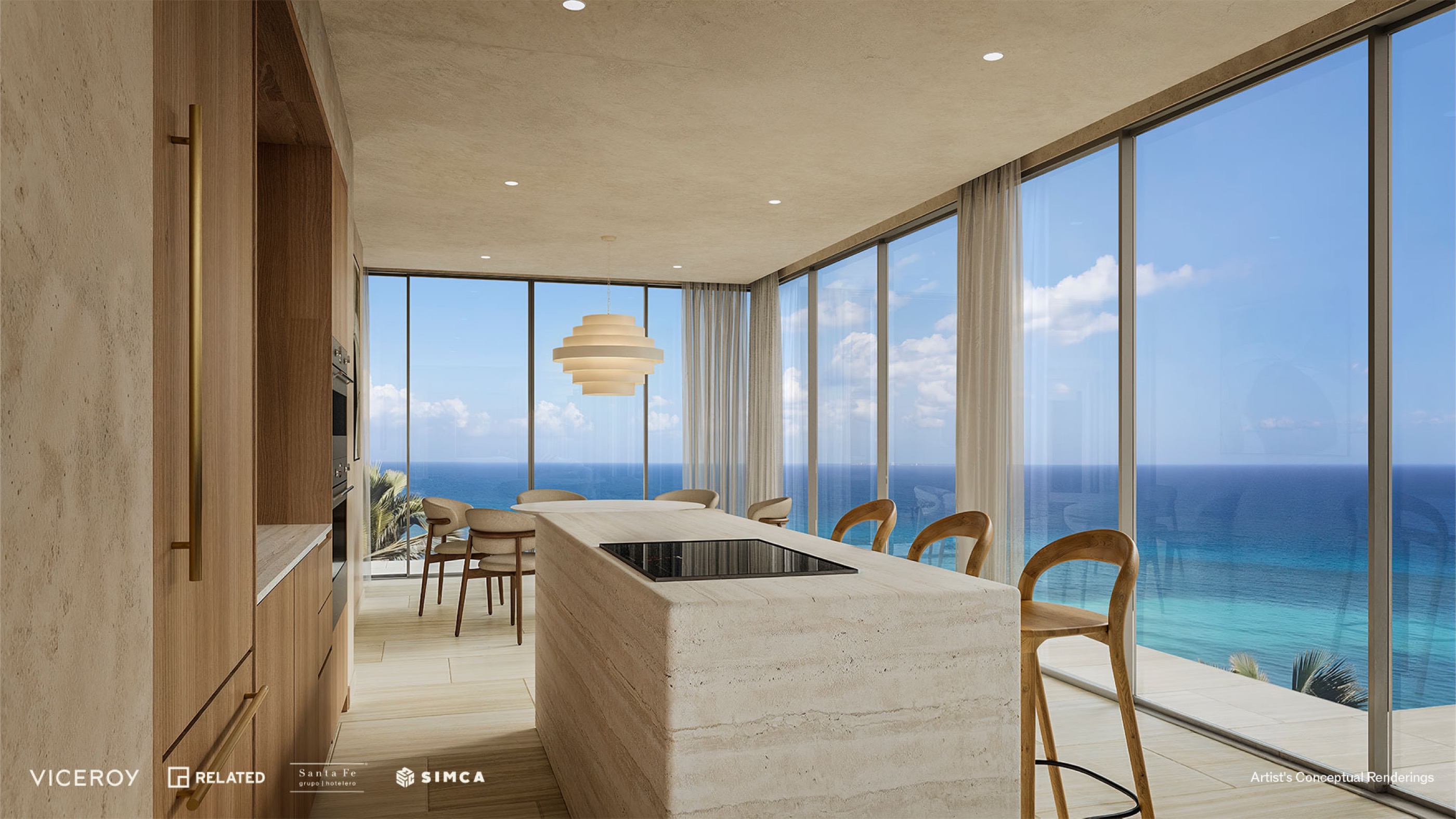
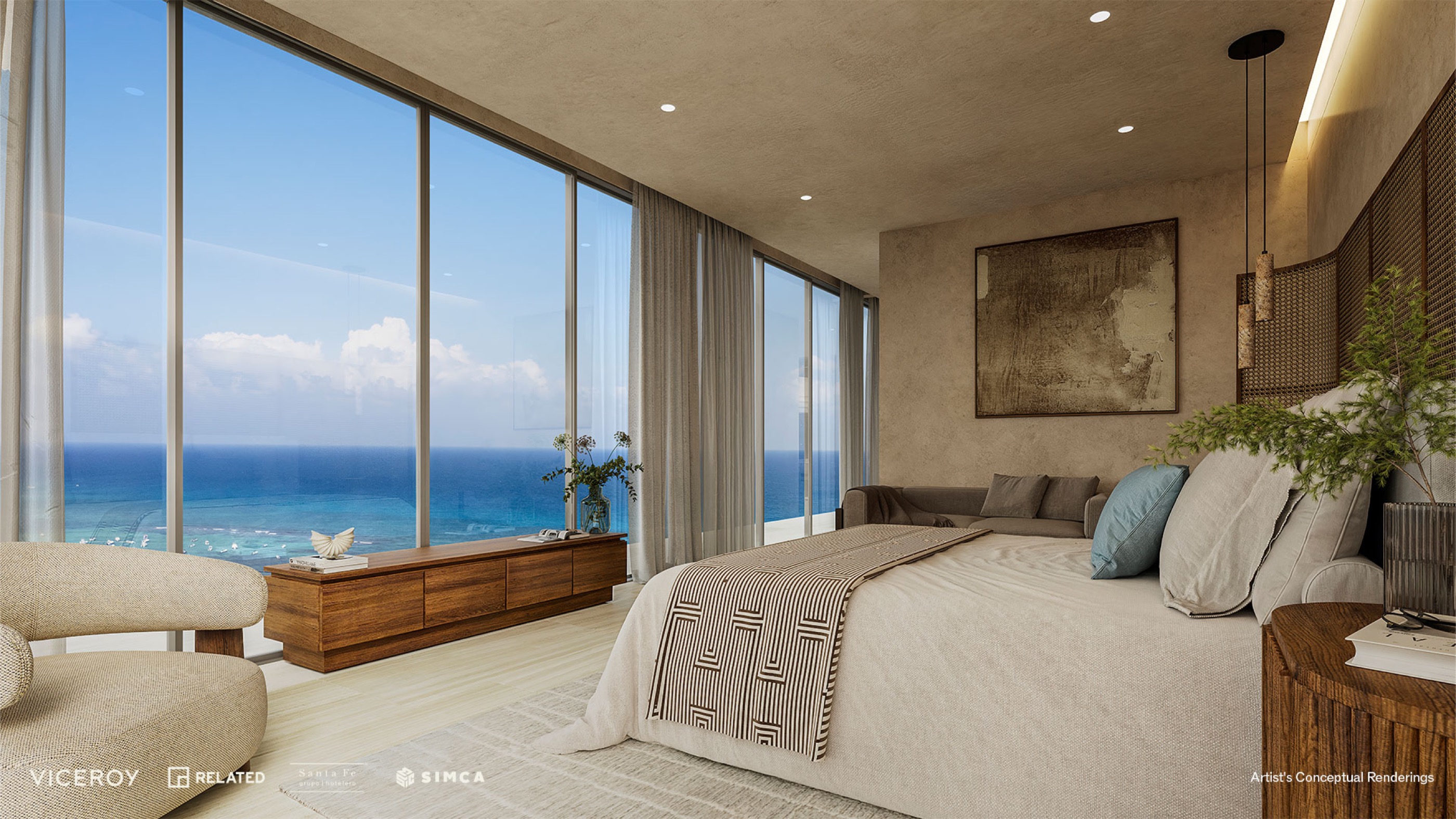

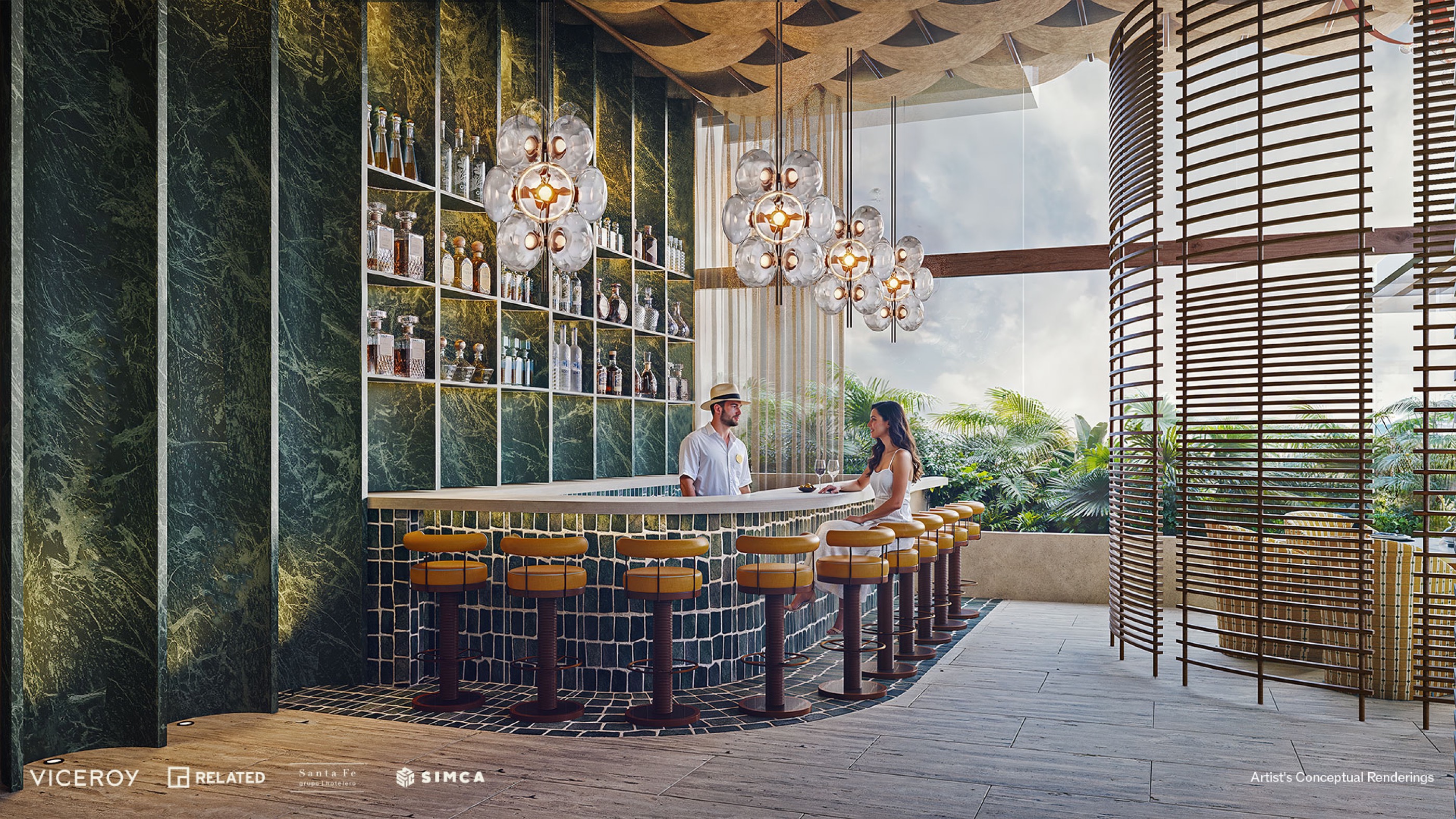

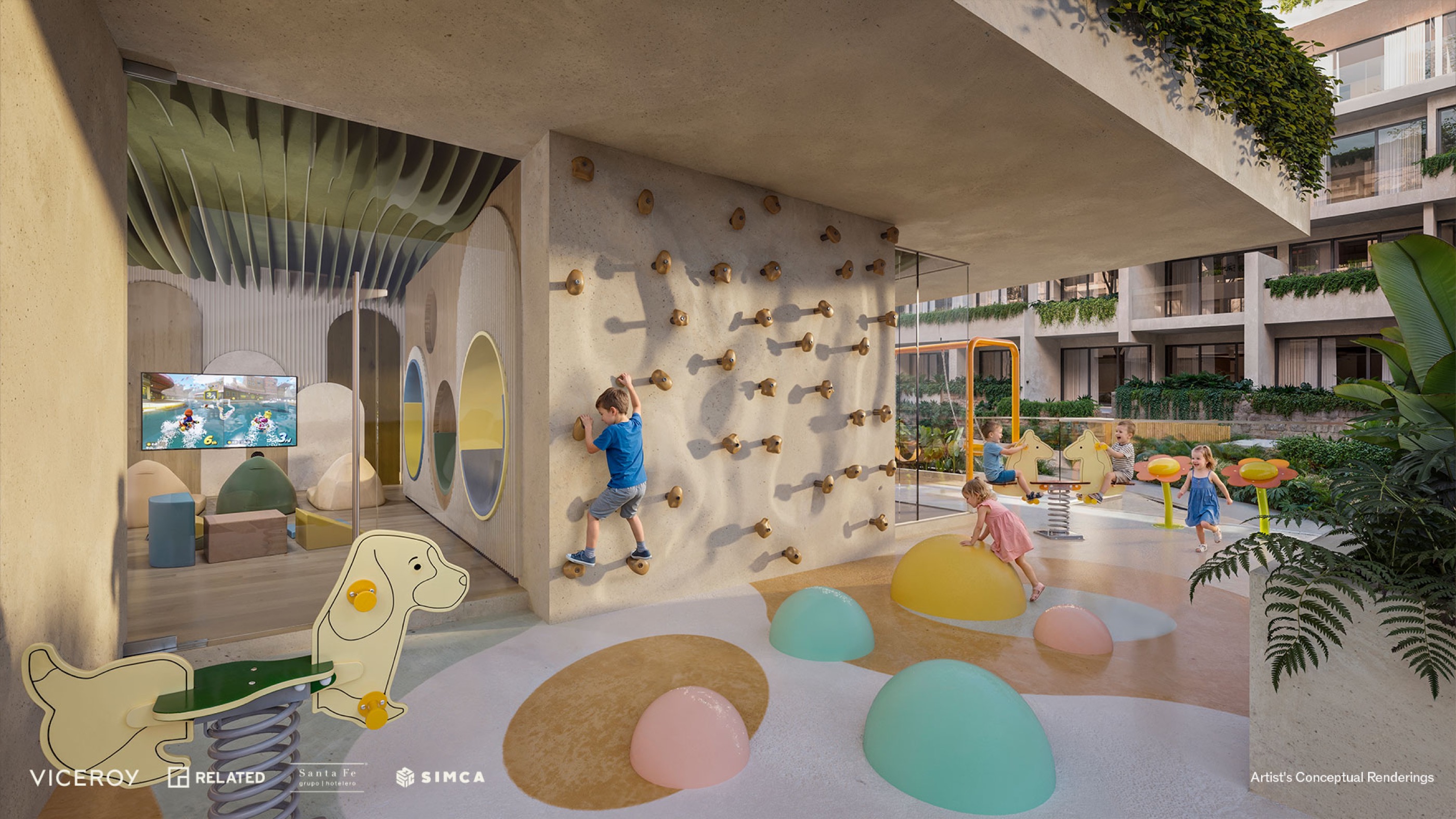
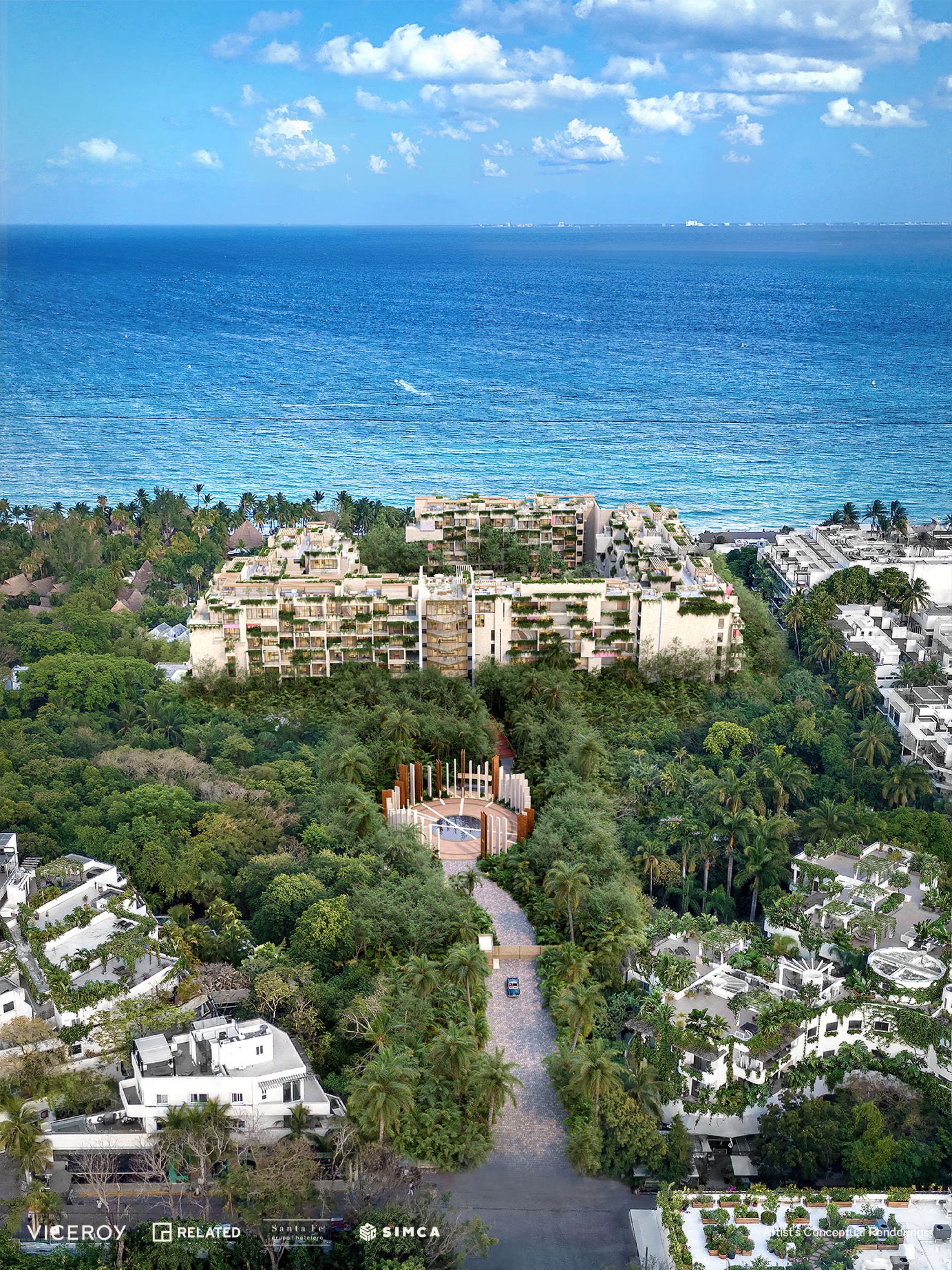
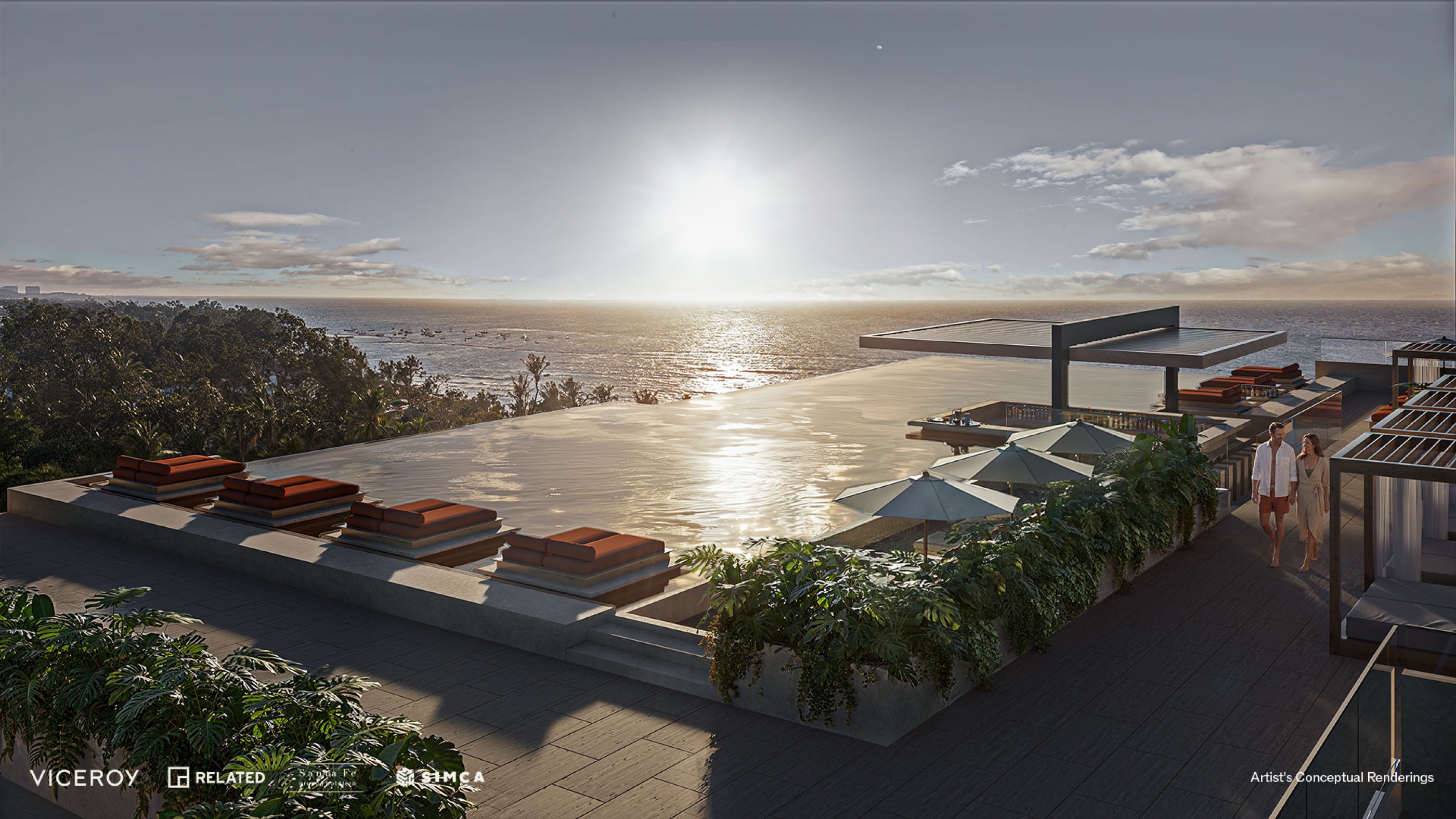
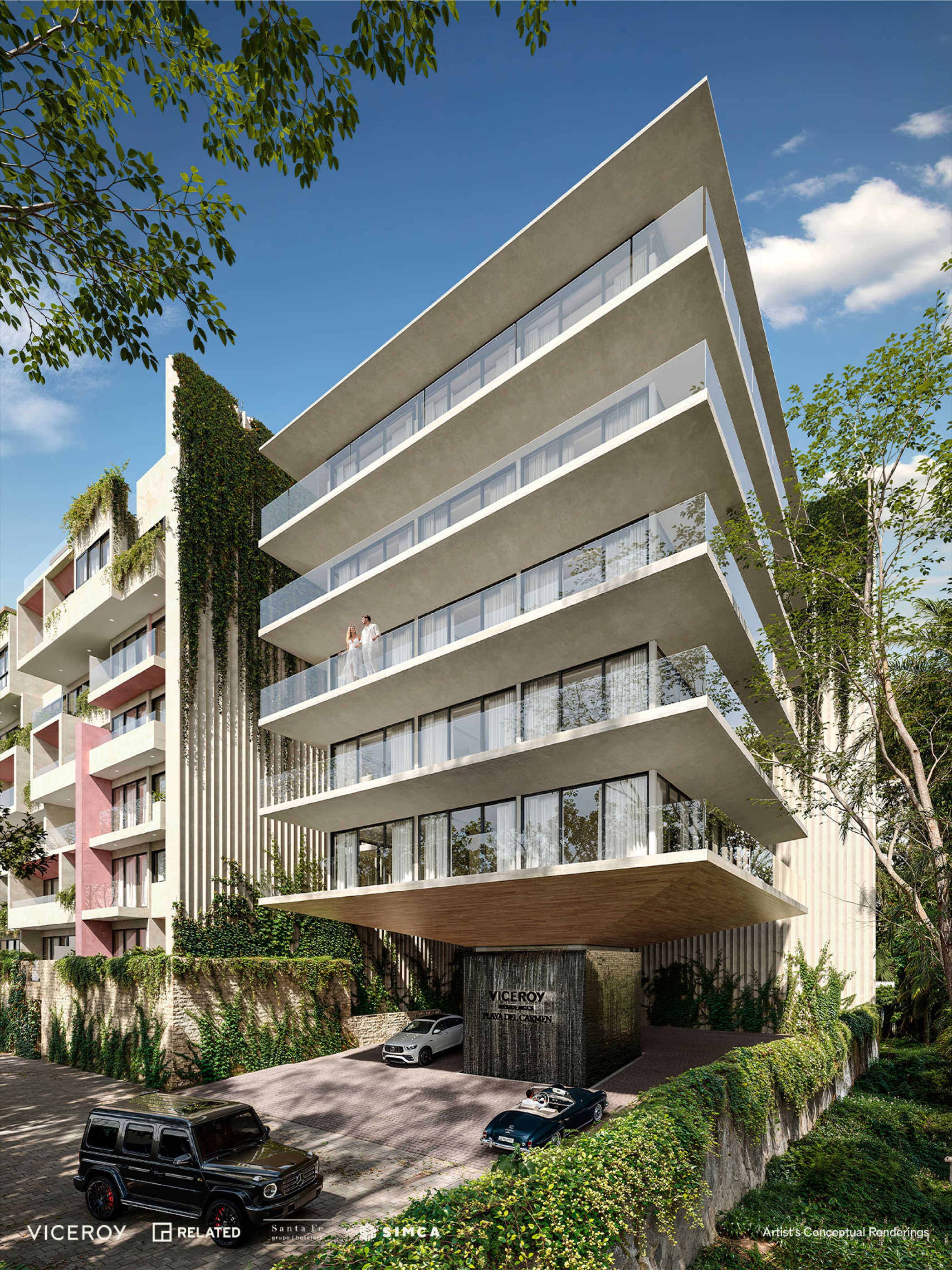
Artist's conceptual renderings supplied by the developer, not photographs: the building does not exist yet, and the developer's own disclaimer calls them preliminary and subject to change.
No official price. A market range, labelled.
The developer publishes nothing. Every figure below is a broker’s, named and dated, and none of it is validated by the Viceroy firm or by the developer.
The whole ladder, floor to ceiling
USD 370,000 to about 4 million
The floor is the one-bedroom, quoted between USD 370,000 and 410,000 by six resellers in August 2026, spread 11 percent apart and not one of them the developer. The ceiling comes from the developer’s own sales office, which puts the top of the building near USD 4 million.
Entry ticket
30% then 30% in stages, 40% at delivery
From the developer’s own payment table, not a broker’s estimate. Full schedule under financing below.
Delivery
Phase 1: Dec 2028
Declared by the developer. Phase 2 exists in the plan folders with no date.
Where these figures come from +Close −
There is no price document anywhere in this developer’s folder, confirmed entry by entry across all 372 of them. The Levels deck closes every level page with an instruction to contact a Viceroy agent for prices and availability. So the figure above is not the project’s price and is not offered as one. It is what the resale market is asking, and these are the sources, each read on 25 August 2026:
- Nautilus Real EstateMXN 6,859,376one-bedroom, 57.70 m² / 621 sq ft, from a price list they date 19 Aug 2026
- Plalla Real EstateMXN 6,960,366one-bedroom, 55 m² / 592 sq ft, listed as the "from" price
- Riviera Maya Real Estate GroupUSD 395,164one-bedroom, 55.90 m² / 602 sq ft, plus USD 260 a month in fees
- Christie’s International Real Estate MexicoUSD 398,815the same unit as the line above, at a different number
- Couti Real Estatefrom USD 370,000one to four bedrooms, delivery stated as 2028
- Engel & Völkersfrom USD 370,000delivery stated as 2027
There is a reason those numbers refuse to line up, and it is not that anyone is inventing them. This project is priced in pesos. The system a representative works from at the developer’s own sales office is its live inventory, and it carries a Banxico exchange-rate control showing both the rate and the day it was taken: 17.2400, dated 9 May 2026. Every unit on it is listed in Mexican pesos. So every dollar figure in circulation, the six above included, is somebody’s conversion and is only as current as the day they made it. Between that May rate and the August one Nautilus cites, the peso moved 1.7 percent, which is real money at this size and is nobody’s mistake.
That explains part of the spread, and it is worth being exact about how much. Currency accounts for about 1.7 of the 11 points. It does not account for Couti and Engel & Völkers both landing on USD 370,000, which against the peso figures implies a rate near 18.81 and matches no Banxico rate in this window: that reads as a rounded marketing floor rather than a conversion of anything. And it accounts for none of the floor-area problem below. The practical consequence is short. Ask which currency the contract is written in. If it is pesos, the dollar number anyone quoted you is an estimate that keeps moving until the day you sign, and on a delivery this far out that is an exposure to carry deliberately rather than a rounding note.
The ceiling deserves its own line, because a building that runs from USD 370,000 to around 4 million is not one product, it is a ladder, and where a buyer lands on it changes everything about what they are buying. The developer’s own sales office puts the top near USD 4 million. Of the six resellers, only Nautilus publishes a top-of-building figure at all, MXN 58,088,564 for a 377 m² / 4,058 sq ft penthouse, which converts to roughly USD 3.4 million and sits well under what the sales office says. LPR Luxury, a marketing firm rather than a broker, describes penthouses approaching USD 4.1 million. Three sources, three ceilings, and the only one close to the sales office is the one that is not selling units. Ask for the full price list by typology rather than a headline, because the entry unit is the least representative number in the building.
Read those six together and the second finding is not the range. It is that on the two-bedroom, two of these resellers agree on the price to within 0.7 percent and disagree on the floor area by 65 percent: one publishes 87.63 m² / 943 sq ft, the other 145 m² / 1,561 sq ft, for what is sold as the same unit at about USD 645,000. That makes the price per square metre either USD 7,338 or USD 4,464, a difference of 1.6 times in the one number that says whether this is expensive. Somebody is measuring something else, most likely counting terrace or common indiviso as living area. Before any number here means anything, get the area schedule from the developer’s own prospectus and confirm what is being counted.
Delivery is the second place they part company. The developer’s Levels deck says Phase 1 in December 2028, on every level page, in a document that carries no issue date. Outside it, Engel & Völkers says 2027, Couti says 2028, and LPR Luxury says September 2029. Nobody agrees, and the only source with any authority is the one that forgot to date itself. Ask when that deck was issued before treating 2028 as a date.
Two of these resellers also state a total of 375 units across two phases, 200 in Phase 1 and 175 in Phase 2. The developer declares no total anywhere. That outside figure is worth noting because it corroborates something visible in the developer’s own folder structure, where Phase 2 sub-folders sit alongside the Phase 1 plans with no date attached to them. It remains a broker’s number, not a declared one.
One more thing worth checking against question two on this page: at least one of these resellers markets the project as beachfront. The developer’s own master plan shows the residential footprint set back from the shore, with an existing beachfront property occupying the sand in front of it.
On the entry ticket, roughly a quarter down with the balance at delivery is how this project is being sold in the market right now, from brokers working it. No published source states a down-payment percentage or a payment schedule: all six keep that behind a contact form. Treat it as an order of magnitude for planning, confirm the schedule in writing, and tie the instalments to construction milestones rather than to calendar dates, which is the part that actually protects a buyer on a delivery this far out.
One thing the market range cannot tell you: whether it is per unit type or per floor, and what the contract currency is. Both change the number materially. How buying works here and the payment simulator are separate pages; this is only what is specific to this project.
Legal structure: Banco Monex, S.A., Institución de Banca Múltiple, as trustee of fideicomiso F/12238, is the Developer of record. The offering is made only through the Developer’s Prospectus, which is not in the shared folder. No verbal statement from any seller should be relied on over the developer’s own disclosure documents.
What the zone actually moves, and where this can’t be placed.
Not a valuation and not a comparables table. What the corridor around Calle 32 asks per square meter, and which price bands buyers are actually asking about. The developer publishes no price, so this project cannot be placed on the chart below on its own figures. That absence is the finding, not a gap in the data.
Asking price per m², Little Italy and Gonzalo Guerrero corridor
30 projects our monitor tracks on these blocks, 20 of them pre-construction. Viceroy publishes no price and is therefore absent.
- Zonna7,289
- Costera Mamitas6,804
- Solar Midtown6,591
- Altra6,495
- Sonni6,123
- Duna6,110
- Ikuku5,419
- Idilik Residences5,332
- Noble5,309
- Paravian5,288
- Spirit Condos 19785,285
- Studio 344,948
- Le 35 Residences4,766
- Ceiba at 254,694
- Residencia Condos4,692
- Habanero Living4,509
- Luna4,503
- Central Park II4,408
- Eden4,296
- Sensara 284,267
- Ocean Drop4,200
- Serenada4,144
- Abund4,133
- Lua 30303,983
- Ipana3,894
- Distrito Playa3,687
- Buzz3,407
- Almenara3,248
- Joshua Condos2,872
- Playa 322,770
The corridor runs from about 2,770 to 7,289 USD per square meter, with the middle of the field near 4,600. A branded residence would normally sit in the top quarter of that spread, and the broker figures further up this page put it there or past it: divide those asking prices by the floor areas published alongside them and the entry unit works out between roughly 6,600 and 7,500 USD per square meter. The bottom of that band is already about 1.4 times the middle of the corridor, and the top of it clears the highest square-metre price anywhere in this sample. Two cautions before anyone leans on that. It is arithmetic on brokers’ numbers, not on the developer’s, and those brokers do not agree on floor area, which is the denominator. What it does establish is a floor: on nobody’s figures is this project cheap for the corridor.
Apartment buyer requests in Playa del Carmen, by price band
May and June against July and August 2026, 226 requests in total.
Under USD 150k
where the zone is thickest
USD 150 to 250k
flat, and still deep
USD 250 to 400k
the band the market figures land in
USD 400 to 700k
thin, and thinning
USD 700k and up
the top of the building
Demand here is a pyramid and this project sits near the tip. The band the market figures for it fall into is growing, and the one above it is thinning. Neither is a verdict on the building: it is a read on how many people will be shopping in your band when you resell.
Source: FEUDO’s own broker-request monitor and project set. It measures what brokers wrote down, which is not the whole market and skews toward what circulates between agents. A read on direction, not a valuation, and no price on this page was derived from it.
How this one can be paid for
Five ways a property changes hands in Mexico. Which of them are actually open on this project, and what gates the ones that are not. How each one works is a separate page.
- Pre-construction instalmentsOpen
This is the route here and the product is built around it. The developer’s own sales system, observed at its sales office in May 2026 and subject to change like anything it has not published, runs a payment table with the structure set out as 30 / 10 / 10 / 10 / 40: 30 percent as the deposit at signing, then 10 percent at month 8, 10 percent at month 16 and 10 percent at month 24, with the remaining 40 percent as the balance against delivery at month 30. Two things follow. First, none of the six resellers publishing a price also publishes this, so a buyer comparing quotes online is comparing headline numbers with no idea of the schedule underneath them. Second, that schedule is counted in months from signing, not from any calendar date, and 30 months is the developer’s own implied build time. Ask which milestone each of those months is tied to. A percentage due at month 16 protects nobody if month 16 arrives with the slab unpoured, and on this modality that linkage, not punctuality, is the entire protection a buyer has.
- CashOpen
Possible, and usually where the real negotiation on a pre-sale happens. It is also the version that carries the most risk: money handed over against a building that does not exist yet, with no lender forcing anyone to verify the paperwork. Pay this way and the review a bank would have demanded becomes yours to buy.
- Bank mortgageConditional
Not on an unbuilt unit. A bank lends against a finished property with a constituted condominium regime and a complete file, none of which exists until delivery. It becomes available at handover, which matters for planning: a buyer counting on a mortgage to cover the final payment is counting on an approval that cannot be sought for another two years, on a property whose brand and amenity roster the developer expressly does not guarantee will be the same by then.
- Developer financingNot offered in writing
Nothing in the shared folder offers post-delivery terms and nothing rules them out. If they are offered, the lender is the developer rather than a regulated institution, the terms live entirely in the contract, and that adhesion contract has to be registered with PROFECO to be enforceable against a buyer.
- Infonavit / co-financingNot available here
Requires having contributed formally to the Mexican system, so it does not exist for a foreign buyer. Worth one check if you are Mexican and worked in Mexico: a housing sub-account can sit unnoticed for years.
Each verdict below is read from the project's delivery state and from what the developer's own folder does and does not contain, against the five ways property is paid for in Mexico. The entry percentage is a market reading, not a developer figure, and it is flagged as such. No rate appears here: in a pre-sale the terms are set by the developer, so they are a fact about your counterparty rather than about the market.
The developer gives a street address and never a coordinate, which is worth saying plainly on a project that is not built yet. Note also that the sales gallery is at a different address, Fifth Avenue and Calle 34 Norte, so a site visit and a sales visit are two different trips.
Calle 32 Norte, Gonzalo Guerrero, 77720 Playa del Carmen, Quintana Roo, México
Open the full mapPin: Google Maps place listing for “Viceroy Playa del Carmen”, read 28-Aug-2026.
How far to what
- Quinta Alegría mall1 km3 min
- Fifth Avenue2 km4 min
- Walmart, Av. Colosio4 km6 min
- Centro Maya mall5 km7 min
- Hospiten Riviera Maya6 km8 min
- Cancún International Airport (CUN)56 km46 min
Road distances and drive times measured from the pin above, routed on OpenStreetMap's street network on 25 August 2026. Times assume clear roads.
Start here
Want everything
behind what you just read?
This project gives its numbers in a conversation, and we have that one on your side of the table: the documents, the ones missing, and what we would ask before an offer. Independent analysis, not a substitute for the developer’s own disclosure.
Or write directly to [email protected]
Tell us what you want to know.
We’ll come back with what the documents confirm, what they don’t, and what we’d ask before an offer.