

Trébola Tulum
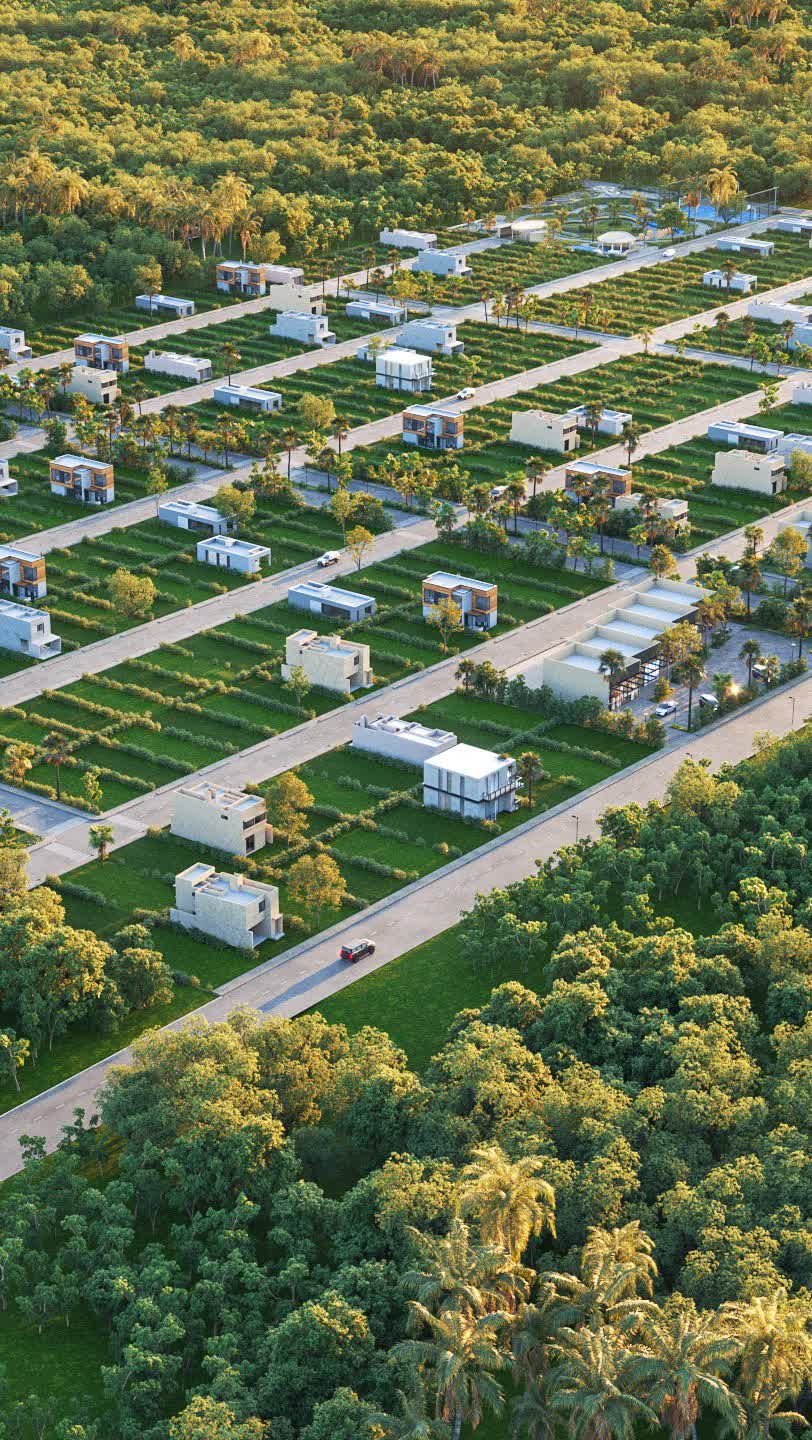
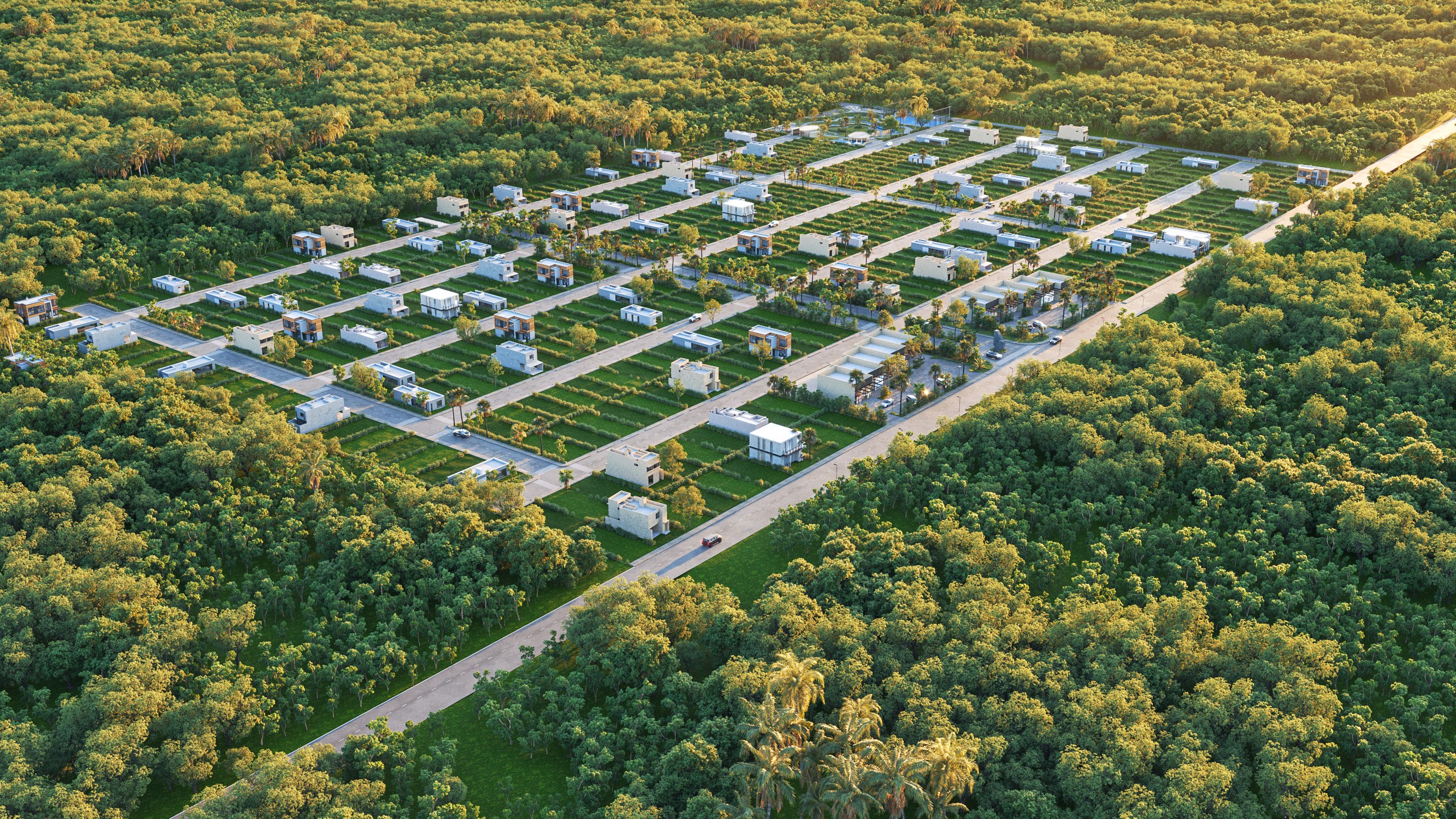
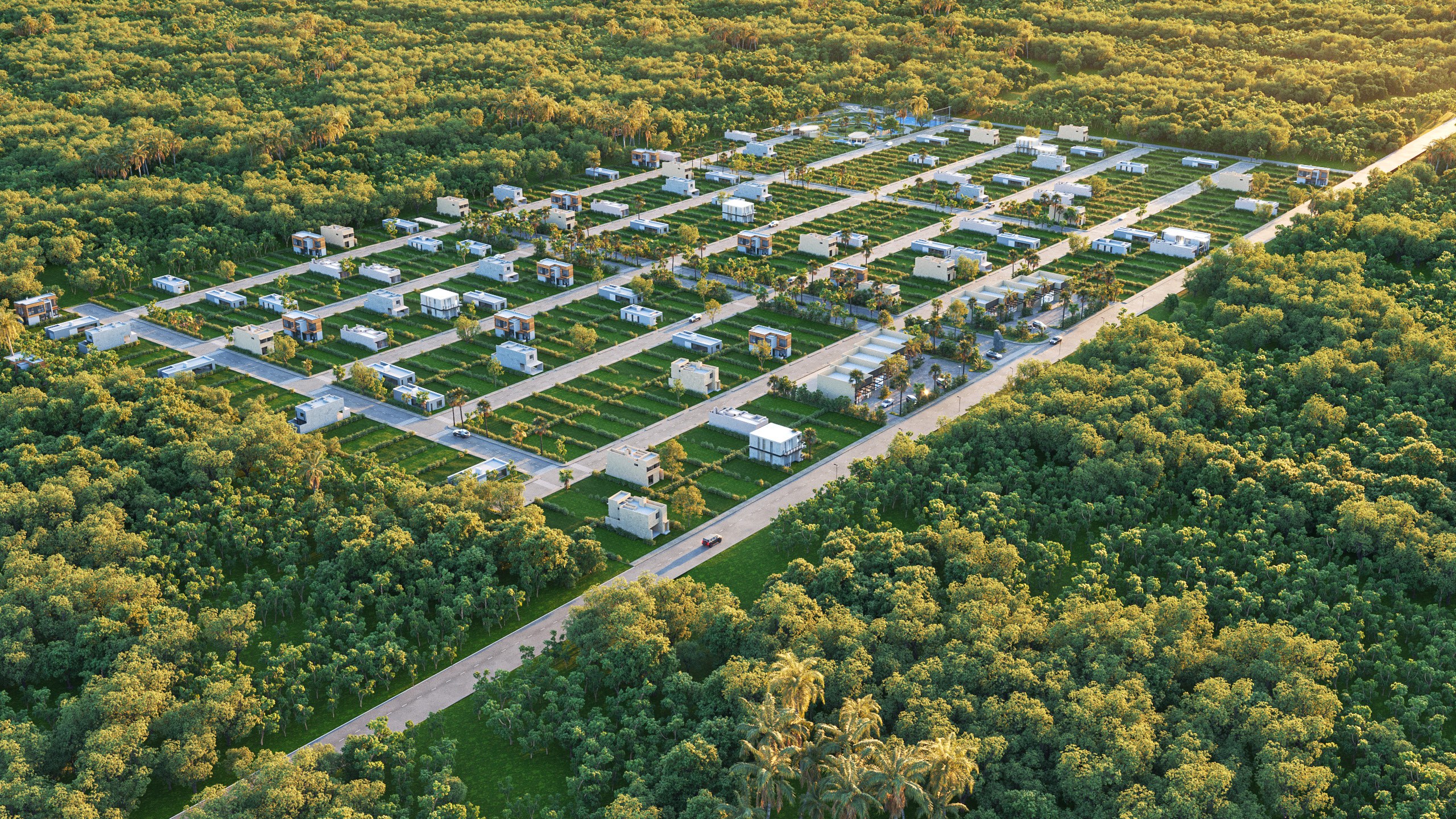
The developer's render of the finished master plan. The land itself is in the first weeks of urbanization: a road being cleared and graded, shown further down exactly as the folder has it, not staged for this page.
Trébola Tulum is a 530-lot residential and commercial subdivision on a single 12.3-hectare (123,047 m² / 1,324,470 sq ft) private parcel in Región 11, on the 10 Avenida Norte Bis corridor north of Tulum town, developed by Grupo Emérita. The land is sold as individual titled lots, not built homes: residential lots run from 122.9 m² / 1,323 sq ft up to 280 m² / 3,014 sq ft, sold in preventa (preconstruction) across 6 etapas of 2 fases each. The parcel itself carries a private, notarized and registered title, already subdivided into an individual folio per lot, which is a materially different starting point than the ejido titling (title to communally held land, not individually owned) this region can carry a reputation for. What the developer doesn’t document: any buildable-area coefficient for what you can put on a lot, and a single, confirmed delivery date.
Source: Ficha Técnica Trébola (Apr-2025); Brochure_Trebola_ESP (Oct-2025); Master Plan de Zonificación (Mar-2024); Escritura 588 (the public deed) and its subdivision (Nov-2023 / Feb-2024); Cédula Catastral (Jan-2024), all developer- or municipality-issued. Captured 26-Aug-2026.
It fits you if
You want raw land in Tulum with a private, notarized, registered title, subdivided into an individual folio per lot, and you’re comfortable verifying that yourself at the state property registry rather than taking a brochure’s word for it.
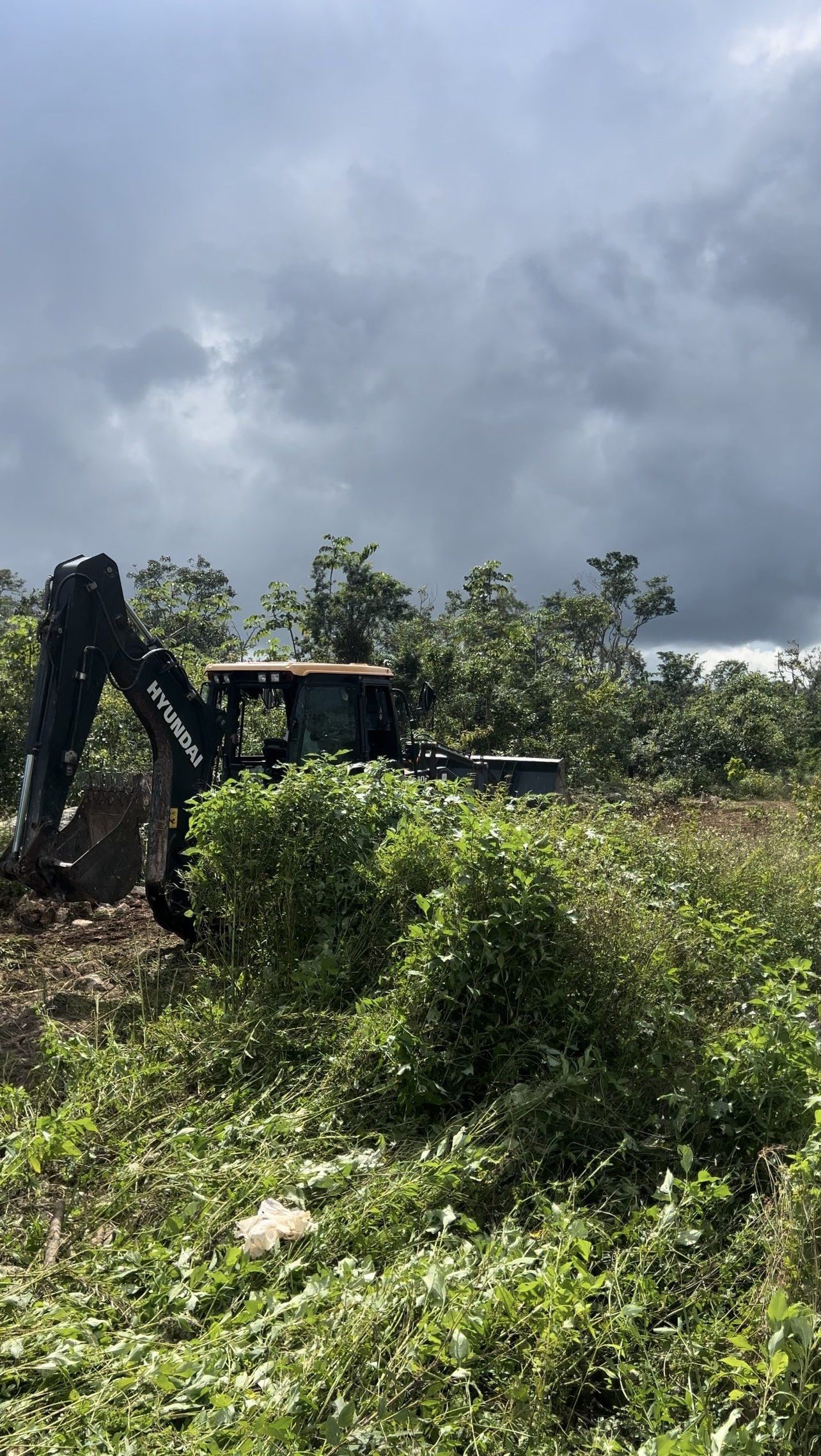
You’re comfortable buying at the earliest stage of urbanization: the developer’s own photographs show a road being cleared and graded, not paved streets with connected services. The six photos below are exactly what the folder contains, nothing staged for this page.
Your interest is a residential lot in the 122.9–200 m² / 1,323–2,153 sq ft range, priced and quoted in the developer’s August 2026 list, rather than one of the 43 comercial locales, which carry no documented price at all.
You want a defined instalment plan (15% down, up to 120 months) rather than paying the full amount at once, and you’re willing to confirm in writing which of the developer’s two differing payment structures is actually current before signing.
It doesn't if
You need to know today what you can actually build on the lot: floor area, height, number of levels. No document in this project’s Drive states a buildable-area coefficient; the contract only requires you to go obtain the permits yourself.
You need one firm delivery date to plan around. The developer’s own file says April 2028 for the first two etapas only, and states nothing at all for etapas 3 through 6.
You need bank financing on the lot itself. Nothing in the folder offers, prices, or even discusses a mortgage on raw land here.
You need every document in the folder to agree with itself. The April 2025 technical sheet describes a 45%-on-delivery payment structure; the August 2026 sales sheet and brochure describe a different one entirely, with no note reconciling the two.
North of the pueblo, closer to the tracks than the beach.
Región 11 sits on the north edge of Tulum Pueblo, along the corridor that runs toward the Tren Maya line, a different Tulum than the beach hotel zone or the boutique-condo colonias like Aldea Zama or La Veleta most Tulum marketing targets. It is closer to the working town: a hospital, supermarkets and Avenida Cobá’s commercial strip are a 6–11 minute drive away. No dedicated zone research exists yet for this specific corner (ejido, road network and amenity build-out here are all newer than the colonias FEUDO has curated dossiers for), so the municipal-level context below describes Tulum broadly, not this parcel specifically.
Two municipal facts worth carrying into this specific location. Tulum’s urban area has a documented drainage gap: roughly 60% of the city lacks a functioning sewer system, and only about 20% of wastewater reaches treatment plants. And when Hurricane Beryl hit in July 2024, it was the municipality’s northern zone, not the town center or the hotel strip, that took the harder hit from wind and flooding. Región 11 sits in that northern band.
Source: FEUDO zone research, Tulum Centro dossier (compiled May 2026), citing the Atlas de Riesgos del Municipio de Tulum and CENAPRED/NOAA hurricane records. Describes the municipality, not this parcel.
The title here runs against Tulum’s own reputation.
Tulum land carries a well-earned general caution around titling: FEUDO’s own zone research flags a documented context of ejidal and irregular-title risk across the municipality, echoed by years of press coverage of preconstruction fraud in this specific market. That is the backdrop a buyer is right to bring to any Tulum land deal.
Against that backdrop, this specific parcel’s own paper trail is unusually complete for a project still in the earthworks stage: a private individual’s notarized contribution of the land to a corporation, registered at the state property registry, followed by a second notarized act subdividing it into 532 fracciones, also registered, with an individual folio issued per lot. A raw baldío (undeveloped lot, per the municipal cédula, the local cadastral record of a property, not its title deed) with that much registered paperwork behind it is the exception on this coast, not the rule.
That strength sits next to the project’s real gap, and it’s the opposite kind of document: nothing here fixes what you can build once you own the folio, and nothing here commits to one delivery date. A clean title answers “is this really yours to buy,” not “what can you do with it once you have it.”
Sources: title chain from Escritura 588, its subdivision and the RPP registration boletas (Nov-2023–Apr-2024); general titling-risk context from FEUDO zone research (Tulum Centro dossier, citing TulumTimes.com and academic sources on ejidos in Tulum).
Five questions to settle before you sign.
Each one comes straight out of the developer’s own documents, or their absence. Open any for what they say, why it moves the decision, and how it gets settled.
Question 1 of 5
What can you actually build on a lot here?
No document in the folder fixes a buildable-area coefficient. The contract only obliges you to go get one.
Read the reasoning +Close −
Across all 484 files walked in the shared Drive, none states a COS (coeficiente de ocupación del suelo, how much of the lot’s footprint can be covered) or CUS (coeficiente de utilización del suelo, total buildable area stacking every floor), a maximum height, or a maximum number of levels. The purchase contract template only requires the buyer to obtain, at their own cost, "los permisos, licencias y autorizaciones... para construir su Proyecto Arquitectónico sobre El Lote, de conformidad a las normas de construcción a que haya lugar."
Why it moves the decision
A 122.9 m² / 1,323 sq ft lot with a generous coefficient and one with a tight one are two different products at the same price, and nothing here says which this is. Buying by lot size alone, without knowing what fraction of it you’re actually allowed to build on, is buying half the information.
How it gets settled
Request the certificado de uso de suelo (the municipal land use certificate, distinct from a building permit) for the specific manzana (city block) and lote you’re considering, from the Dirección de Ordenamiento Urbano of the Ayuntamiento de Tulum, before signing. It states the coefficient; the developer’s brochure doesn’t.
Source: Absence verified across Ficha Técnica (Apr-2025), Master Plan de Zonificación (Mar-2024), Brochure (Oct-2025), Escritura 588 and its subdivision, Cédula Catastral (Jan-2024) and Machote de Contrato, checked 26-Aug-2026. Full Drive walk: 564 entries, 80 folders, 484 files.
Question 2 of 5
Who do you actually buy this from, and is the title clean?
Private, registered, individually subdivided: not the communal-land title Tulum carries a general reputation for.
Read the reasoning +Close −
Escritura Pública 588 (the public deed, notarized 23-Nov-2023 at Notaría 92, a notary office in Mérida) records an aportación social: private individual Ileana Aurelia Canul Dzib contributed the parcel to "Grupo ACSUR" S.A. de C.V. as capital. That deed is registered at the Registro Público de la Propiedad of Quintana Roo, Playa del Carmen office, folio real 182369, 12-Jan-2024. A second notarial act (Acta 29, 1-Feb-2024, same notary) subdivides the parcel into 532 fracciones and is itself registered, 30-Apr-2024, issuing an individual folio per lot (532 in total: the 530 sellable lots plus the park and the transformer area). The municipal cédula catastral confirms régimen de propiedad "PARTICULAR" and tenencia "PROPIEDAD DEFINITIVA": this is not ejido land, the communally held land Mexico is known for, where a private, individually registered title like this one is the exception rather than the rule.
Why it moves the decision
The municipality of Tulum carries a documented general risk of ejidal and irregular land titling. This project’s own paper trail runs the opposite way: a private contributor, a notarized transfer, registration at the state property registry, and individual folios per lot. That doesn’t remove ordinary closing diligence, but it is a materially cleaner starting point than the town’s reputation would suggest.
How it gets settled
At closing, confirm your specific lot’s individual folio (one of the 532 issued 30-Apr-2024) at the Registro Público de la Propiedad, and confirm Grupo ACSUR S.A. de C.V. is still the seller of record before signing anything.
Source: Escritura 588 (23-Nov-2023) and its registration boleta (folio 182369, 12-Jan-2024); Escritura de Subdivisión Acta 29 (1-Feb-2024) and its registration boleta (30-Apr-2024); Cédula Catastral folio 79834 (25-Jan-2024).
Question 3 of 5
When does this actually deliver?
The developer’s own file says April 2028 for the first two etapas. A different internal record says otherwise, and etapas 3–6 have no date at all.
Read the reasoning +Close −
A dedicated file titled "Fecha de entrega Trébola.pdf," and the brochure itself, both state, in Spanish and English: "FECHA DE ENTREGA: FASE 1 & 2: ABRIL 2028." No document in the shared folder gives any delivery date for Etapas 3 through 6, which is four of the project’s six stages.
Why it moves the decision
A delivery date decides when the urbanization work shown in the site photographs below (graded road, cleared lots) actually becomes paved streets and connected utilities at your specific lot. Two years and four undated etapas is a wide range to buy into without a written commitment for your phase.
How it gets settled
Get the delivery date for your specific etapa and fase in the signed contract itself, not the brochure: the contract template reviewed here does not fix one either. Ask directly which of the developer’s own documents is current.
Source: "Fecha de entrega Trébola.pdf" and brochure p.22 (both dated 18-Aug-2026 on file); absence verified for Etapas 3–6 across the full Drive, checked 26-Aug-2026.
Question 4 of 5
Does the street reach your lot yet, or not?
The developer’s own photographs show a road being cleared and graded, not a finished street with services.
Read the reasoning +Close −
Six undated site photographs in the shared folder show a backhoe grading a dirt track through jungle and clearing brush along what the master plan labels as the project’s internal streets. The zoning plan itself is dated March 2024, two and a half years before this was written, so the plat is settled; the photographs show physical work still at the earthworks stage.
Why it moves the decision
Trébola sells in phases (Etapa 1 through 6), and nothing in the folder states which specific manzanas have paved streets, power and water today versus which are still raw. A lot in the phase being sold first is not automatically the phase closest to finished infrastructure.
How it gets settled
Ask, in writing, which manzanas have completed urbanización (street, power, water) as of today, not as of the delivery date, and get dated photographs or a site visit before choosing a specific lot over another.
Source: Six site photographs in the shared Drive (filenames only, no EXIF date extracted); Master Plan de Zonificación (Mar-2024) and Master Plan de Disponibilidad (20-Aug-2026).
Question 5 of 5
Is the headline price still on the table?
The brochure’s "lots from $605,465.60 MXN" describes a lot size that no longer exists in Etapa 1 Fase 1.
Read the reasoning +Close −
The brochure’s own footnote pins the figure to a specific lot: "Montos referenciales sobre lote de 122.93m2, etapa 1, fase 1." The August 2026 price list has no such lot: the smallest size sold in Etapa 1 Fase 1 today is 160 m² / 1,722 sq ft, at MXN 552,347.68 cash. A 122.94 m² / 1,323 sq ft lot does exist today, but in Etapa 2 Fase 1, at MXN 424,410.15 cash, about 30% below the brochure’s figure. None of the shared price documents lists a price for any of the project’s 43 commercial locales either.
Why it moves the decision
A buyer who reads "$605,465.60 MXN" as today’s entry point is anchoring on a lot size the current price list doesn’t sell in that phase at all. The comparable lot that does exist costs meaningfully less, which is worth knowing before assuming the brochure number is still live.
How it gets settled
Ask for the full August 2026 price list by etapa, fase, lot type (A, A esquina, AA, AA esquina) and size, and a specific quote for any comercial local, before treating the brochure’s headline number as current.
Source: Brochure p.22 footnote (Oct-2025, republished 18-Aug-2026); Trebola - Lista de precios AGOSTO 2026.xlsx, sheet DISPONIBLES (20-Aug-2026), opened and checked row by row 26-Aug-2026.
You can settle this without them
- The title chain and each lot’s individual folio: a public-records search at the Registro Público de la Propiedad of Quintana Roo, Playa del Carmen office.
- The land-use coefficient (COS/CUS) for a specific manzana (city block) and lote: the certificado de uso de suelo (the municipal land use certificate), requested directly from the Ayuntamiento de Tulum, independent of anything the developer states.
- Whether the phase you’re buying into is actually urbanized: a site visit, or dated photographs requested directly, compared against the developer’s own undated set shown below.
Only they can answer this
- Which delivery date is current, April 2028 or another one, for the specific etapa and fase being sold, in writing in the contract.
- Which payment scheme is actually being offered today: the April 2025 sheet’s 45%-on-delivery structure, or the August 2026 sheet’s 120-month or mixed structure. The two disagree.
- A price for any of the 43 comercial locales, which no shared document quotes.
Everything they shared, counted.
484 files across the shared folder, 155 of them individual lot plats. A brand-assets folder and the broker-facing commission and confidentiality paperwork are not counted below: they are sales tooling, not buyer diligence.
As shared by the developer · checked 26-Aug-2026. This declares what exists, it doesn't vouch for what's inside.
Brochure / sales materials
2 files, e.g. Brochure_Trebola_ESP_Oct2025-GE.pdf, 24 pages
Floor plans
155 files, e.g. MZA010-LOTE007.pdf and 154 more, one plat per individual lot
Construction / delivery status
6 files, e.g. Trébola (2).PNG and 5 more, dated only by filename
Price list
3 files, e.g. Trebola - Lista de precios AGOSTO 2026.pdf (20-Aug-2026)
Legal / trust documentation
1 file, e.g. RESUMEN DOCUMENTOS LEGALES TREBOLA.pdf, 7 pages: deed, subdivision, municipal anuencia, cadastral cédula
Payment terms
2 files, e.g. COMPARATIVO DE ESQUEMAS.jpeg (120-month and mixed payment schemes)
Purchase contract
1 file, e.g. MACHOTE CONTRATO.pdf, 16 pages
HOA & fees
No maintenance-fee document in the shared folder. The price list, brochure and contract template never mention a recurring lot fee.
4 smaller gaps, worth knowingopen +close −
The property’s surface appears as 123,047.44 m² / 1,324,474 sq ft in the zoning plan (Mar-2024) and 123,047.33 m² in the municipal cédula catastral (Jan-2024), an 0.11 m² gap consistent with rounding between an architect’s survey and the cadastral one, not a discrepancy worth alarm.
The escritura de subdivisión formally creates 532 fracciones; the zoning plan’s own lot count totals 530 sellable lots and locales. The 2-fraction gap is the park (5,362.39 m² / 57,721 sq ft) and the transformer area, which are subdivided as fracciones but are not for sale.
The developer’s brochure states it comes "de los creadores de Kaybé y Valenia." That is the developer’s own claim about its track record; it wasn’t independently verified for this analysis.
The purchase contract template (MACHOTE CONTRATO) declares its buyer to be "una persona física, de nacionalidad mexicana," a Mexican national, and structures the sale as a direct promise of sale between vendor and buyer. A separate, dated annex from a real February 2026 transaction instead names the parties "Promitente Fideicomitente" and "Promitente Fideicomisario," the settlor and beneficiary roles of a fideicomiso (a Mexican bank trust that holds title on the buyer’s behalf). Neither document states the rule connecting the two, but it lines up with Mexican law: land inside the coastal "restricted zone," which covers Tulum, can only be held by a non-Mexican buyer through a bank trust, not a direct deed. This wasn’t confirmed against a third document that states it outright, so treat it as the likely explanation, not a developer disclosure, and ask directly which structure applies to you before signing.
The land, today and as planned
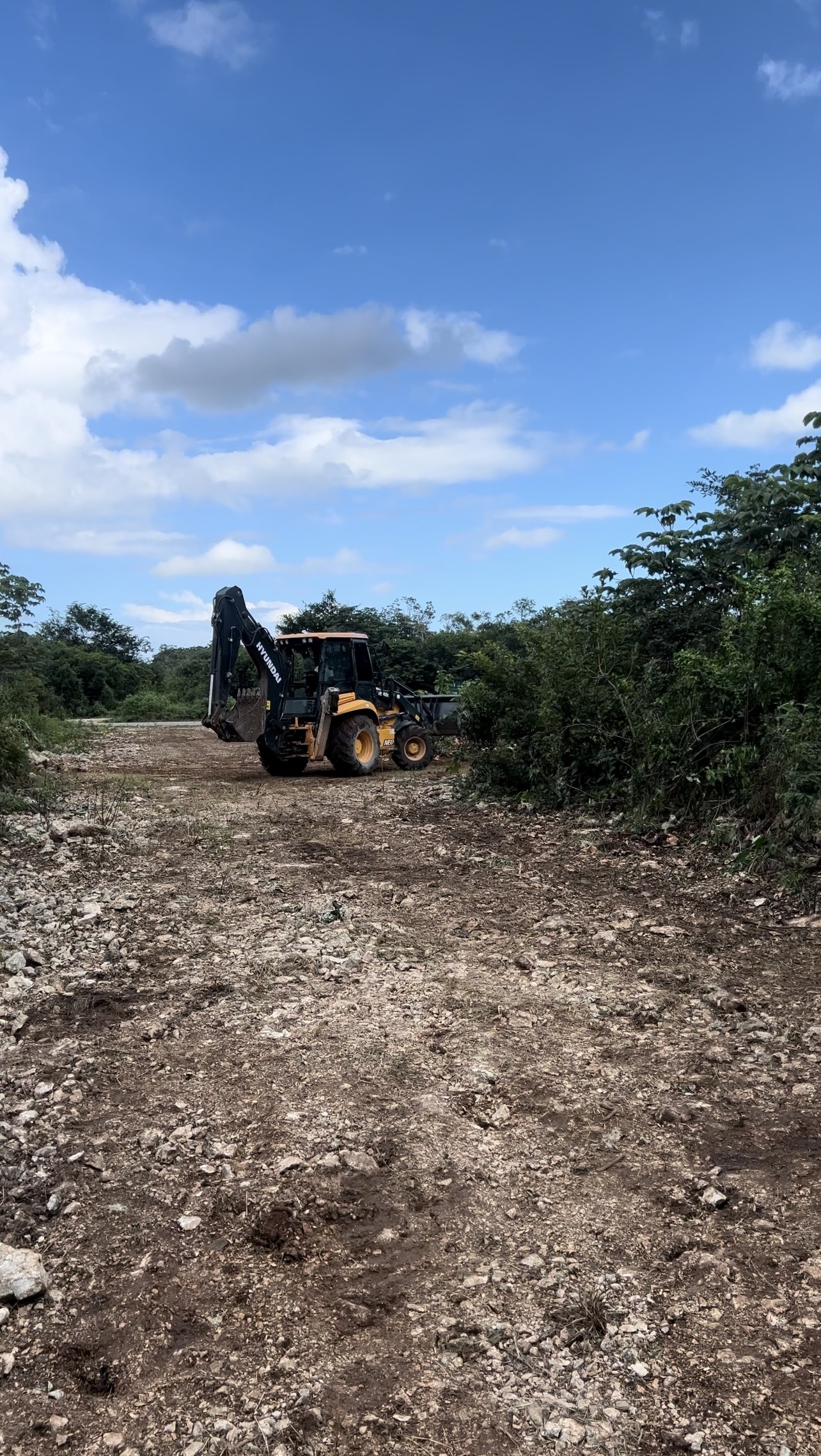
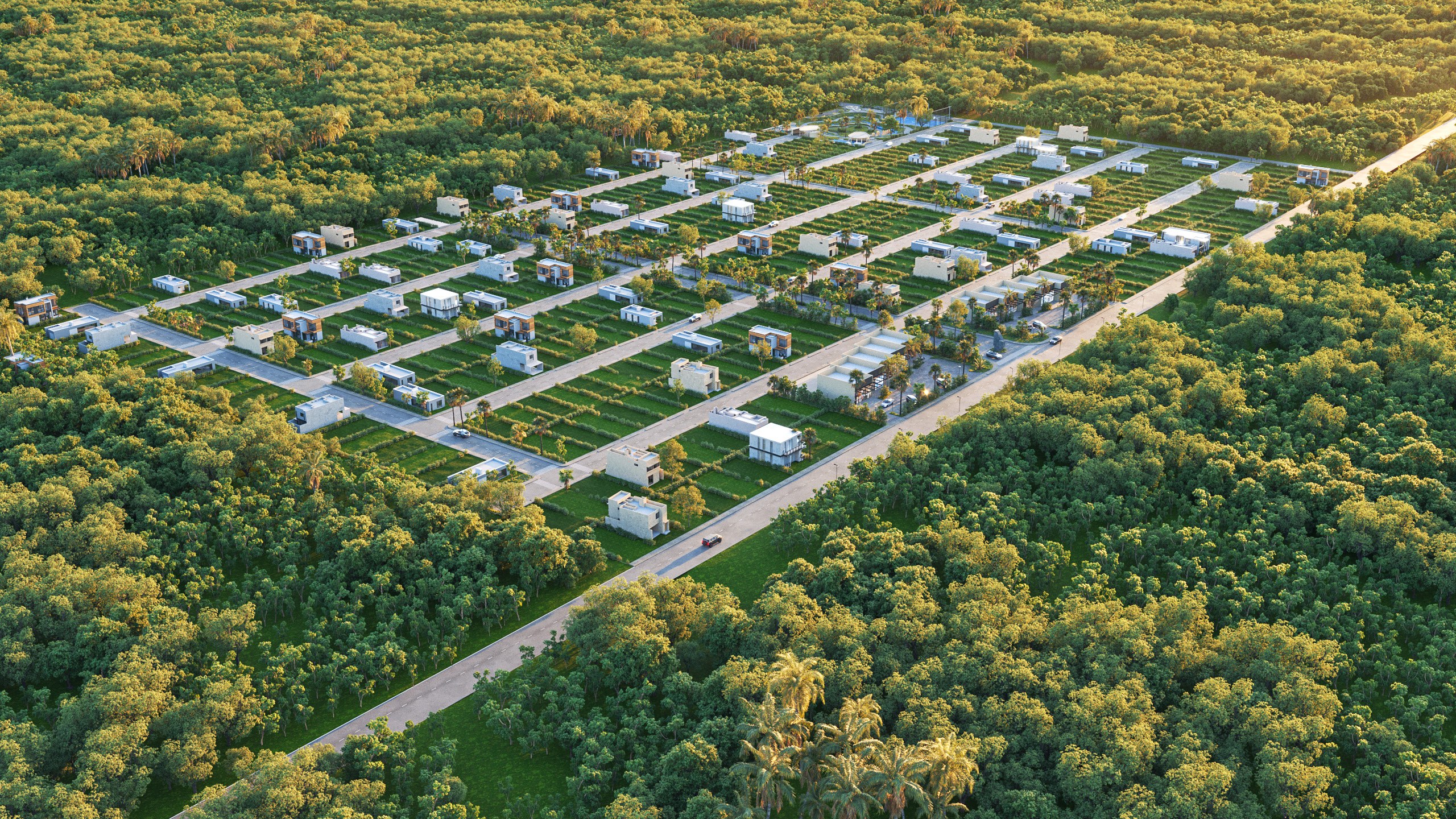
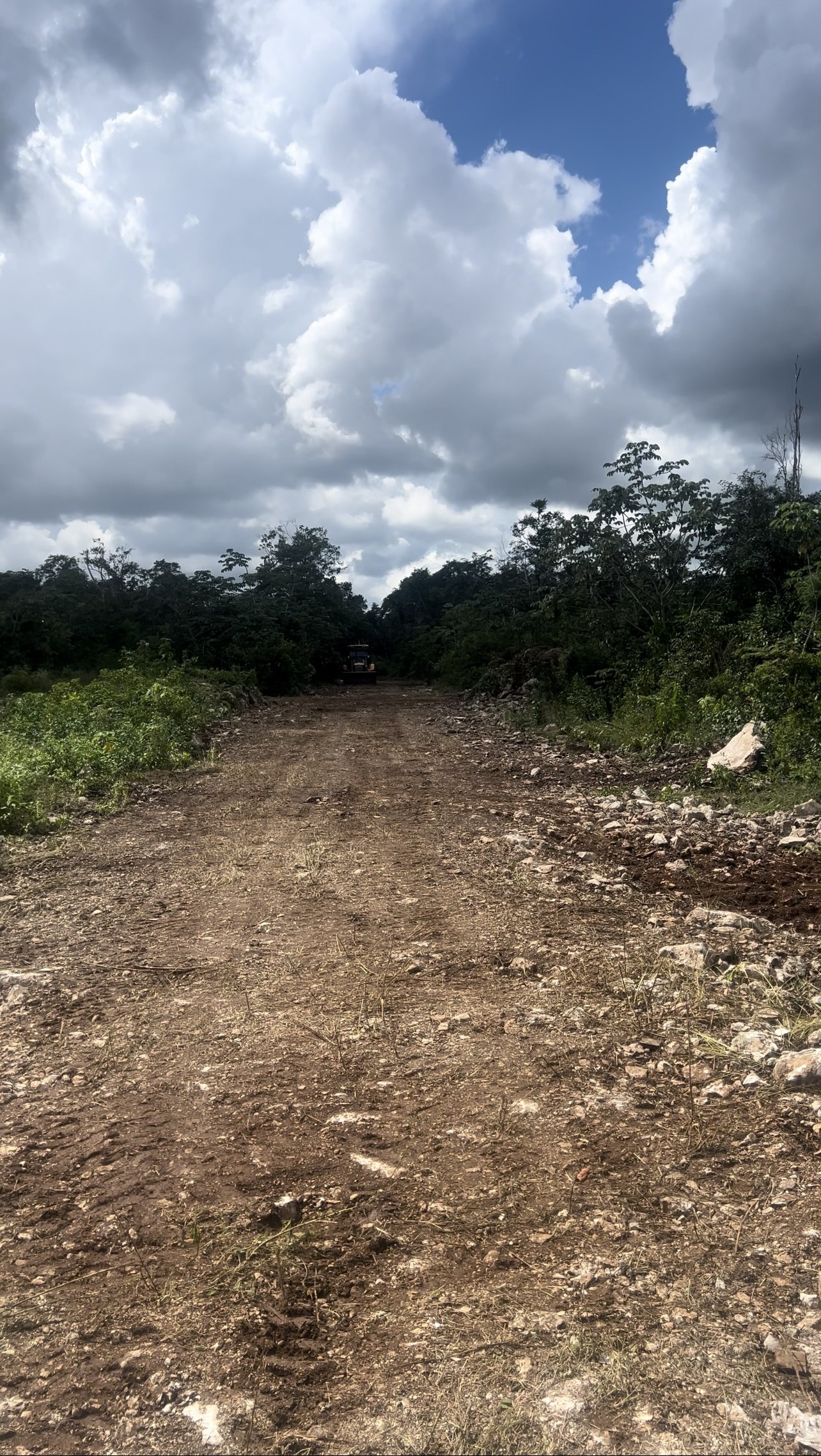
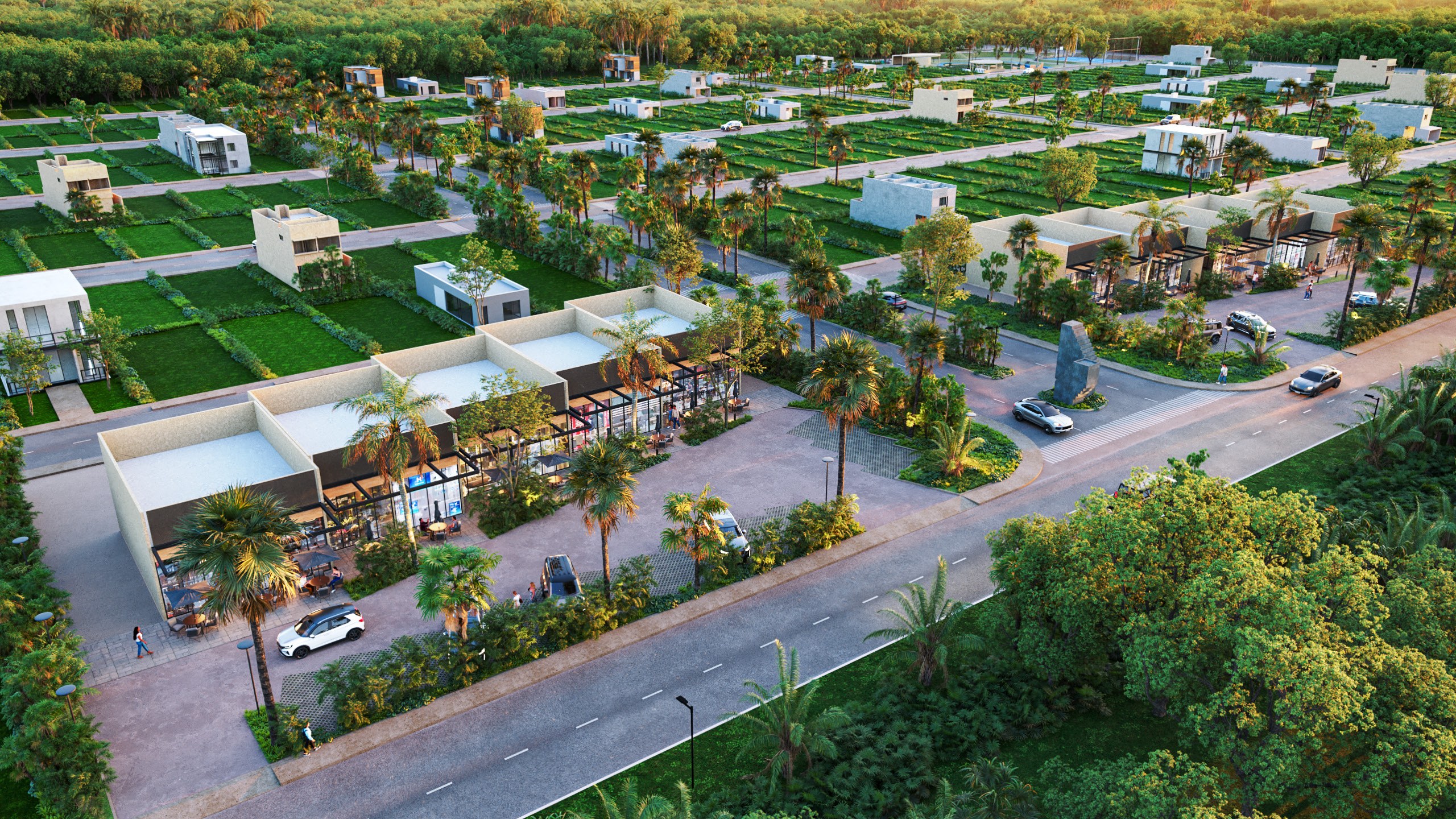
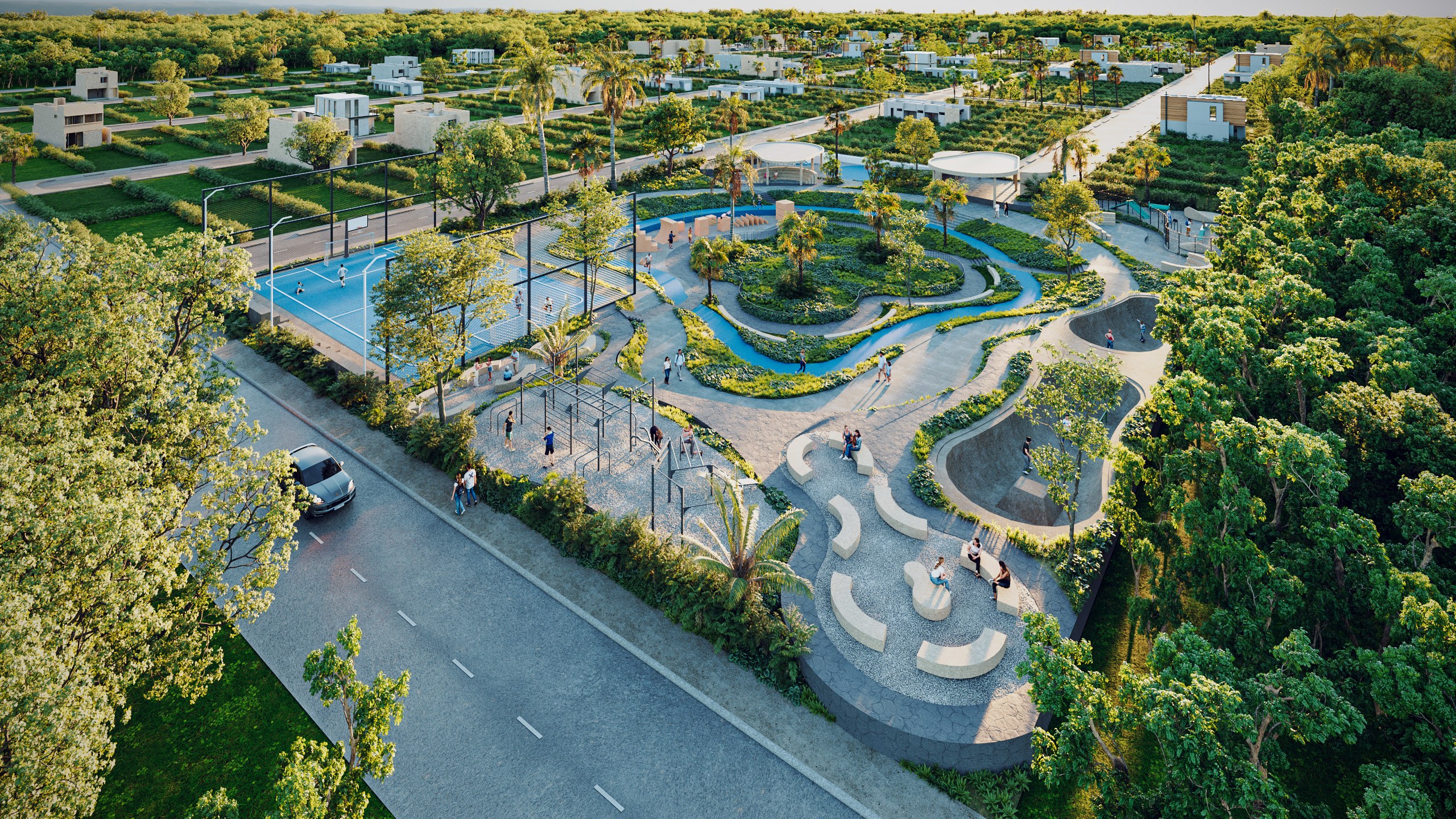
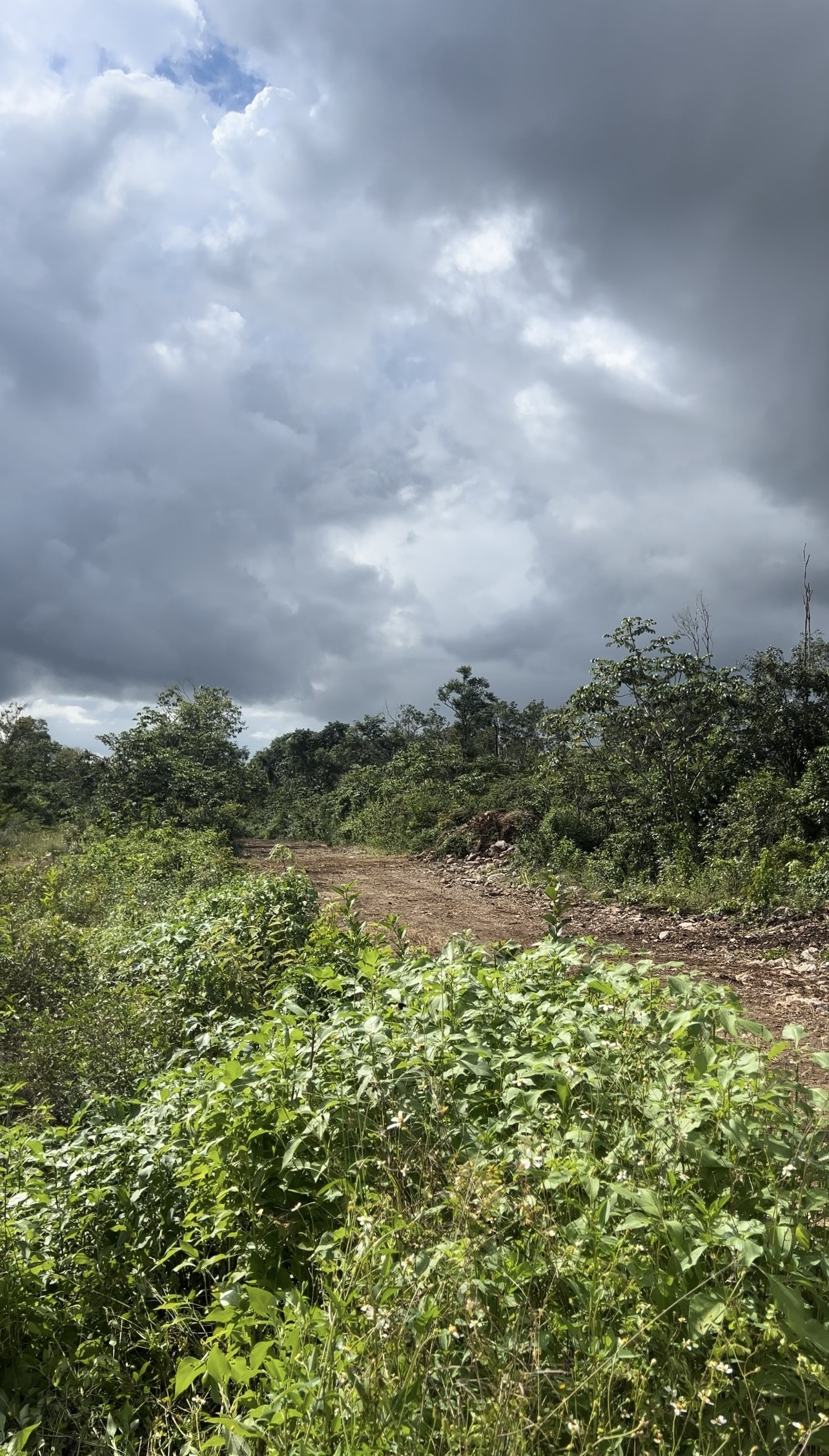
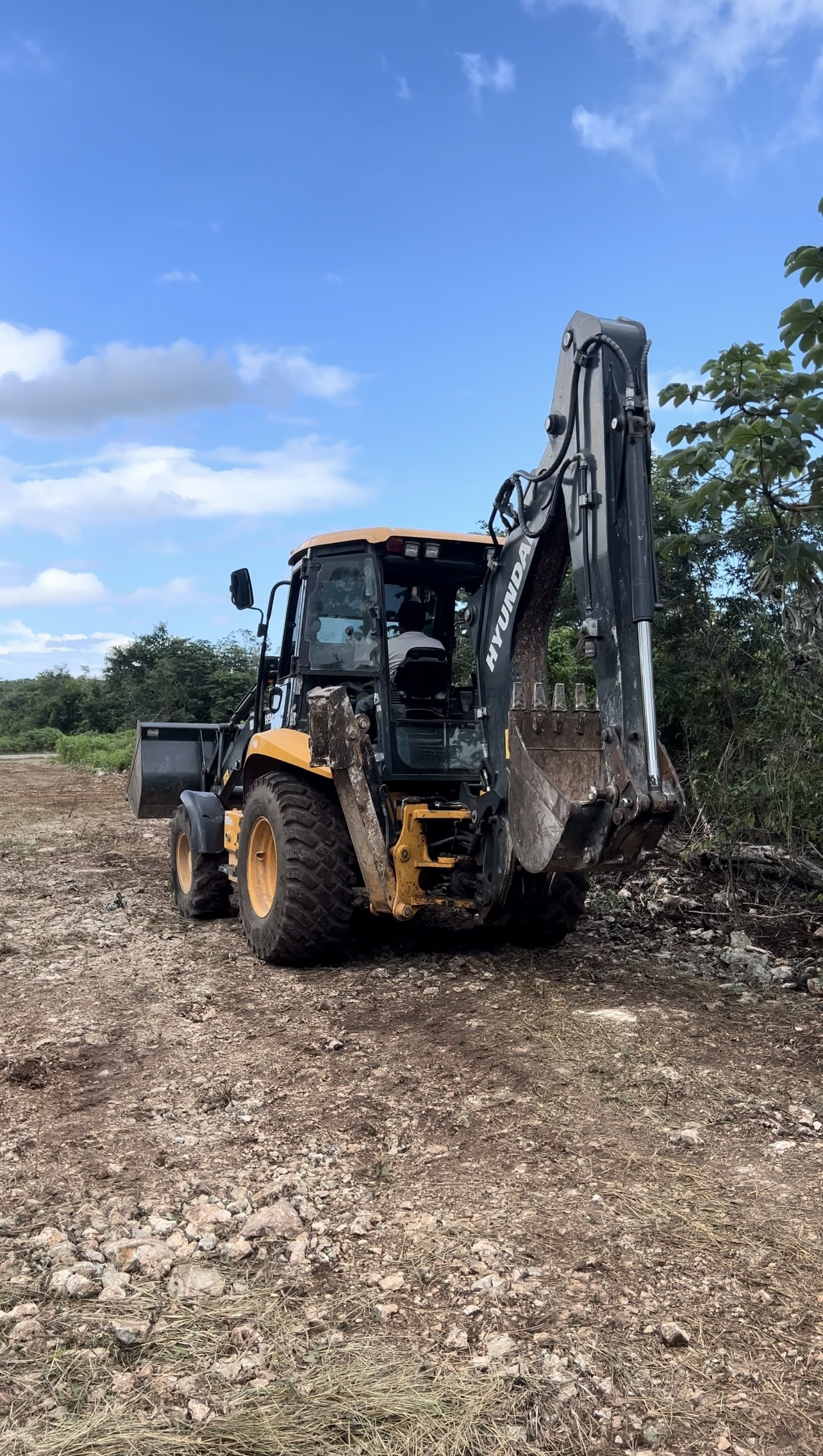
Photographs and renders supplied by the developer. Renders are illustrative of the plan, not a guarantee of what gets built or when.
A real range, and a price we could cross-check.
Etapa 1 lot price
MXN 552,000 – 715,000
160–200 m² / 1,722–2,153 sq ft lots, contado to precio de lista
Entry ticket
MXN 424,410 122.94 m² / 1,323 sq ft lot, Etapa 2 Fase 1
USD reference
~USD 25,000 our conversion, see below
Delivery
April 2028 Etapas 1 & 2 only. See below.
Where these figures come from +Close −
The August 2026 price list ("Trebola - Lista de precios AGOSTO 2026.xlsx") prices lote tipo A in Etapa 1 Fase 1 at MXN 3,452.17/m² cash (a documented 15% discount off the MXN 3,574.01/m² precio de lista): MXN 552,348 for a 160 m² lot and MXN 690,435 for a 200 m² lot at contado, or MXN 571,842 and 714,803 respectively at precio de lista. That is the project’s real Etapa 1 range today, not the brochure’s headline number.
🔴 The brochure’s "lots from MXN 605,465.60" is pinned, by its own footnote, to a 122.93 m² Etapa 1 Fase 1 lot. That lot doesn’t exist in the August 2026 price list: Etapa 1 Fase 1’s smallest size today is 160 m², shown above. The nearest comparable size that does exist, 122.94 m², is sold in Etapa 2 Fase 1 instead, at MXN 424,410.15 cash, about 30% below the brochure’s figure. That is the useful finding underneath the correction: the smallest lot actually for sale today costs meaningfully less than what the October 2025 brochure still advertises, which is still circulating in the same shared folder as the price list that contradicts it. FEUDO’s own market monitor (see below) separately tracked Trébola at an average of USD 35,604 across 36 modeled units, which converts to MXN 604,011 at Banxico’s FIX rate of 16.9647 (25-Aug-2026): close to the brochure’s stale figure, not to the real MXN 424,410 comparable lot above. That monitor is not independent confirmation of the brochure price; it is simply another public source that has not caught up to the August 2026 price list either. Ask for a current quote by lot before treating any headline number, ours or the brochure’s, as this project’s entry price.
No price document in the shared folder quotes any of the project’s 43 comercial locales.How financing works here is a separate page on this site covering the general mechanics; this is only what is specific to this project.
No maintenance or HOA fee document exists in the shared folder for this project. Land subdivisions in Mexico can carry an ongoing quota for shared infrastructure (streets, the park, common areas); ask the developer directly what, if anything, is planned before counting on there being none.
Where this sits among Tulum land, specifically.
Not a valuation and not a comparables table. Where Trébola’s asking price stands against other land-only inventory in Tulum, and against what the zone actually moves in buyer demand.
Asking price per m², land-only inventory in Tulum
Built condominiums excluded: price per m² is not comparable across product types. 13 land developments in FEUDO’s monitor, of which 9 (marked Venta) are built inventory for sale today and 4, Trébola included (marked Preventa), are still preconstruction. Mixing the two without saying so would read as comparing delivered land against promises; this chart doesn’t.
- HARMONY ATABEYventa232
- MARGAY BY ENDÉMICOventa227
- CALIZAventa208
- TROBBU TULUMventa204
- Trébola Tulumpreventa204
- AMOURApreventa196
- XACANpreventa181
- SELVADENTROpreventa167
- AKNA IIventa118
- PANDORA TULUMventa99
- PANDORA AVENIDA 10venta98
- AKNA IIIventa57
- KUYABEHventa23
Middle of the field: Trébola asks about the same per m² as Trobbu Tulum, a built project, above five cheaper land plays and below Caliza, Margay and Harmony Atabey, all three also built. It is not the cheapest lot in Tulum, nor the most expensive, and that comparison holds whether it is read against built land or against the preventa segment alone.
Buyer requests for land in Tulum, by price band
May–June against July–August 2026. Small sample: read direction, not certainty.
USD <150k
where this project’s lots sit
USD 250–400k
a single request either way
USD 700k+
likely commercial-scale land
Land-specific demand in Tulum is thin in absolute terms (single digits per band), and Trébola’s own entry band shows fewer requests in Jul–Aug than in May–Jun. That is a small enough sample that one or two buyers moving changes the picture; it is not a wave in either direction.
Source: FEUDO’s own broker-request monitor and project set, filtered to land-type product only. It measures what brokers wrote down, which is not the whole market and skews toward what circulates between agents. A read on direction, not a valuation, and no price on this page was derived from it.
How this one can be paid for
Five ways a property changes hands in Mexico. Which of them are actually open on this project, and what gates the ones that are not. How each one works is a separate page.
- CashOpen
Documented and priced: the August 2026 price list carries a straight 15% discount off list price for paying cash, on top of whatever the lot itself costs. It is also the only route that sidesteps every question below about which payment scheme is current.
- Bank mortgageNot offered in writing
Nothing in the folder offers it and nothing rules it out. Mexican banks routinely lend against a finished home; lending against a bare, unbuilt lot is far less common and would depend on the specific bank’s appetite, not on anything Trébola controls. Ask a lender directly before assuming this route exists here.
- Pre-construction instalmentsOpen
The developer’s own terms have changed at least once on paper. An April 2025 technical sheet describes 12/24/36/48-month plans with a 15% down payment, 40% across the term and 45% due on delivery. An August 2026 sales sheet and the brochure describe a different structure entirely: a 15% down payment, then either a 48-month interest-free stretch followed by 72 months at 1% monthly, or a flat 60-month plan with 30% due on delivery, both reaching 120 months total. Ask which one is actually being offered on the lot you want, in writing, since these two documents disagree.
- Developer financingNot available here
The instalment plans above already are the developer financing this land: they are extended directly by Grupo Emérita, not by a third-party autofinanciamiento group. No document describes a separate, regulated group-savings scheme (the kind registered with CONDUSEF), so that specific product isn’t part of what’s on offer here.
- Infonavit / co-financingNot available here
Infonavit and Fovissste credit finance a home, built or under a self-construction program on land the borrower already holds title to; they don’t finance the purchase of bare, unbuilt land itself. It also depends on formal Mexican payroll contributions, which rules it out for most foreign buyers outright.
Each verdict below comes from what the developer's own folder contains, judged against the five ways property is paid for in Mexico, not against a quote. No rate appears here beyond what the developer's own payment-scheme sheet states, since a rate is a fact about your counterparty, not about the market.
🔴 The pin below is proposed, not confirmed. The developer’s cédula catastral cites the parcel’s frontage as "10 Av. Nte Bis S/N, entre 30 Av. Nte y Calle 14 Nte," but this far from downtown Tulum, OpenStreetMap doesn’t yet show those two cross-streets connecting to a single confirmable intersection. The point below sits on the correct named road (10 Avenida Norte Bis) at the stretch whose travel times most plausibly match the developer’s own claimed minutes to town; it has not been triangulated against a second independent reference the way this site’s other pins have been, and should be confirmed before publishing.
10 Avenida Norte Bis S/N, entre 30 Avenida Norte y Calle 14 Norte, Tulum Pueblo, Municipio de Tulum, Quintana Roo, México
Open the full mapPin: Google Maps place listing for “Trébola Tulum”, read 28-Aug-2026.
How far to what
- Hospital de Tulum5 km6 min
- Downtown Tulum (Av. Cobá / Chedraui supermarket)6 km11 min
- Aldea Zama7 km10 min
- Zona Arqueológica de Tulum8 km15 min
- Playa Paraíso, nearest public beach access12 km19 min
- Tulum International Airport (TQO)41 km44 min
Road distances and drive times routed from the proposed pin above on OpenStreetMap's street network, 26 August 2026. Because the pin itself is provisional (see note above), these distances carry the same margin and should be re-run once the pin is confirmed.
Worth being precise about what sits inside what: this is one 12.3-hectare parcel in Región 11, a designation of the town of Tulum Pueblo, itself the seat of the municipality of Tulum. “Tulum” on its own, in most marketing, describes the beach hotel zone many kilometers southeast of here; this parcel is inland, north of the town, not on the coast.
Start here
Want everything
behind what you just read?
The documents, the ones still missing, and what we would ask before an offer. Independent analysis, not a substitute for the developer’s own disclosure and not a sales pitch.
Or write directly to [email protected]
Tell us what you want to know.
We’ll come back with what the documents confirm, what they don’t, and what we’d ask before an offer.